Relock Devices: Other Types

There are a number of less common types of re-locker devices.  For example, high-security safes sometimes come with ”glass relockers”.  There is typically a piece of tempered glass with two holes in it, and wires under spring tension are hooked into the holes.  If a person pounds on the lock it will shatter the glass, causing the relock pin to snap into place, which blocks the safe boltworks from being forced open.  Hitting the glass with a drill bit will also break the glass.

Thermal relockers are found only on high end, high-security safes.  Normally there is a piece of metal or a soldered piece in a wire arrangement, all under spring pressure.  The metal melts at a very low temperature, maybe 250 degrees.  Heat generated from a torch, or even from extensive grinding, will melt the metal which sets off the relocker.

Relockers, Graffunder 003

Some relockers do not actually block the boltworks from moving.  On some units firing a relocker causes a heavy bolt to shoot out from the door, behind the frame of the safe.  This is great way of keeping the door from being forced open.  The photo shows a unique system:  The relock can be fired either by an attack on the lock, by a torch cutting through the cable, or by melting the soldered thermal joint just above the lock encasement.  When set off this is actually a double relocker.  One part (not shown) blocks the right side boltworks from moving.   The vertical bolt shoots out about an inch — this is accomplished with a heavy spring which can’t be seen here.  It is then behind the door opening of the safe body where it very stubbornly keeps the safe door closed.

Once again, only experienced safe technicians should work on your safe.  Inexperienced technicians may accidentally set off a relocker, perhaps costing you hundreds of dollars.

Relock Devices on Safes: Internal Relockers

Most safe manufacturers tell you that they have relock devices in their safes, but they never tell you what one is or what it does.

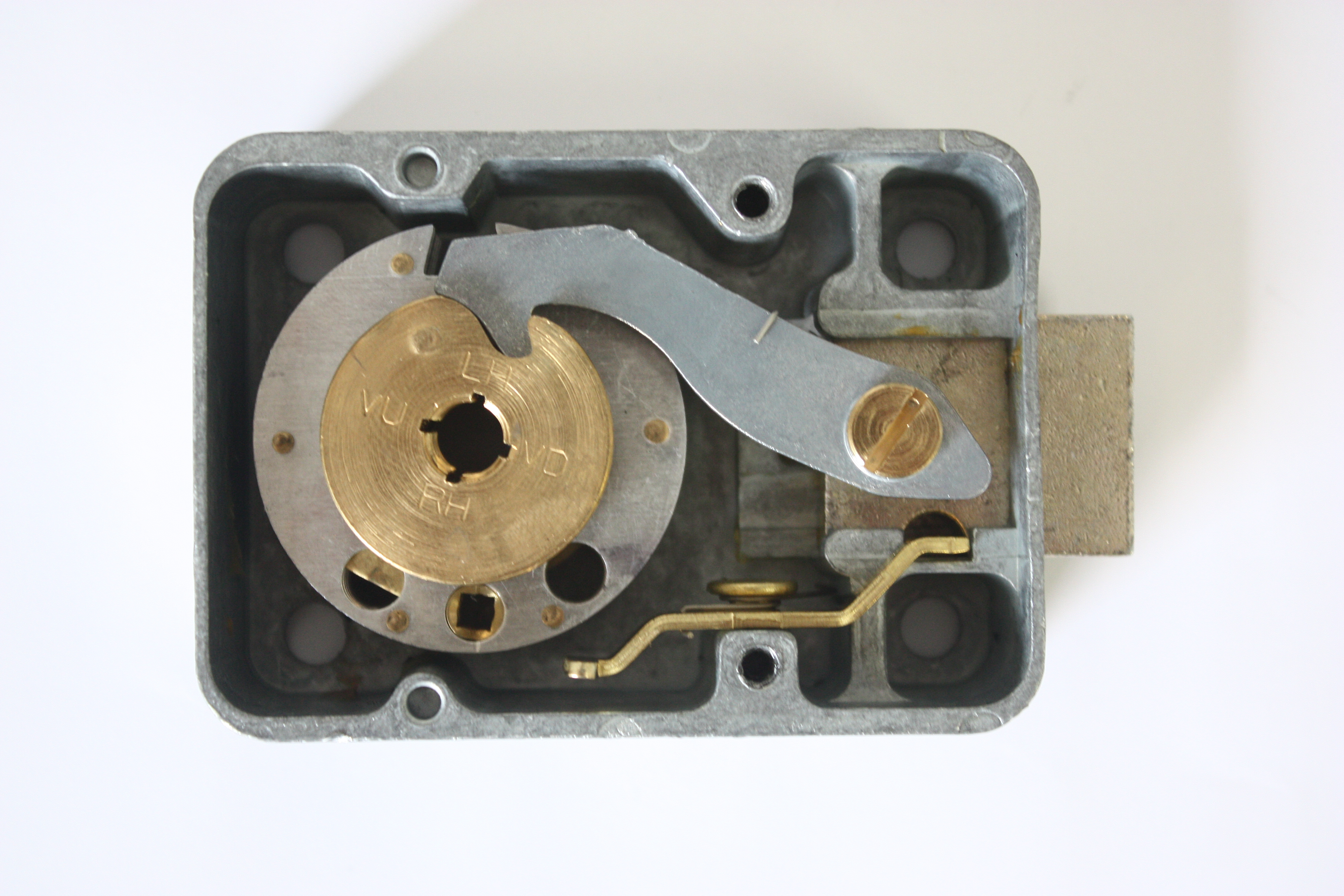
The most common form of relocker is the “internal” relocker.  “Internal” because it is located inside the lock body on safe locks that are rated Group 2 or higher.  Burglars attempting to break into a safe will frequently smash the lock dial on the outside of the safe with a hammer, bat or anything else they can swing.  The force of that blow will drive the dial spindle back into the safe, against the back cover of the lock body. The lock body is located inside the safe door.  Enough force will cause the back cover to break away along a line that is intentionally made weak by the lock manufacturer.   When this occurs a spring loaded “relock trigger” pops into a hole in the lock bolt.  The lock bolt is the part that actually keeps your safe locked, by preventing the big bolts in the door edge from being pushed back in.  With the relock trigger in that hole, then the lock bolt is deadlocked and cannot be forced to unlock.

RELOCKERS 003RELOCKERS 009

Picture on left shows back cover of S&G Group 2 lock.  Picture on right shows lock with cover removed.  Relocker is the angled brass piece in lower right.  Since the lock cover is removed the relocker is “fired”, and you can see the right end of it is in the hole on the lock bolt.

If the relocker is set off this way a burglar is much less likely to get into your safe.  You will not be able to open it either.  An experienced safe technician will be able to open your safe and make it useable again.  Note that most locksmiths are not skilled at opening locked safes, especially when a relocker has been set off.

Next posting will be on external relockers.

Cheap Gun Safes with Combination Locks

If you are looking to buy a cheap gun safe with a dial-type lock, be careful.  Cheap units with dial locks frequently use what is called a “direct entry” lock system.  These are much less secure than a safe with a Group 2 dial lock.  Try this:  With one hand put pressure on the safe handle, and with the other hand turn the lock dial.  If you feel the lock turning with the hand on the handle, then it is a direct entry lock.  An experienced person can determine the combination when he can feel what is going on inside the lock.  The picture below is the inside of a very cheap direct entry lock system.  The round silver parts near the top are the three lock wheels.  The slot going from the center to the outside edge of the wheel corresponds with one of the numbers on the dial.  You can determine the lock combination when you feel the openings on the wheels through the safe handle.

img070

When a safe has a Group 2 lock you cannot feel the lock through the handle.  These locks, as well as the whole locking system, provide much more protection.  Naturally, they cost more, too.  Spend more money — buy a quality safe with a Group 2 lock if you want your safe to provide real burglary protection.

Key-Locking Safe Dials

Key locking dials on combination locks are sold as security upgrades, especially on gun safes.  Safe buyers are rarely informed of their limitations, however, and misinformation sometimes actually jeopardizes the safe buyer’s valuables.

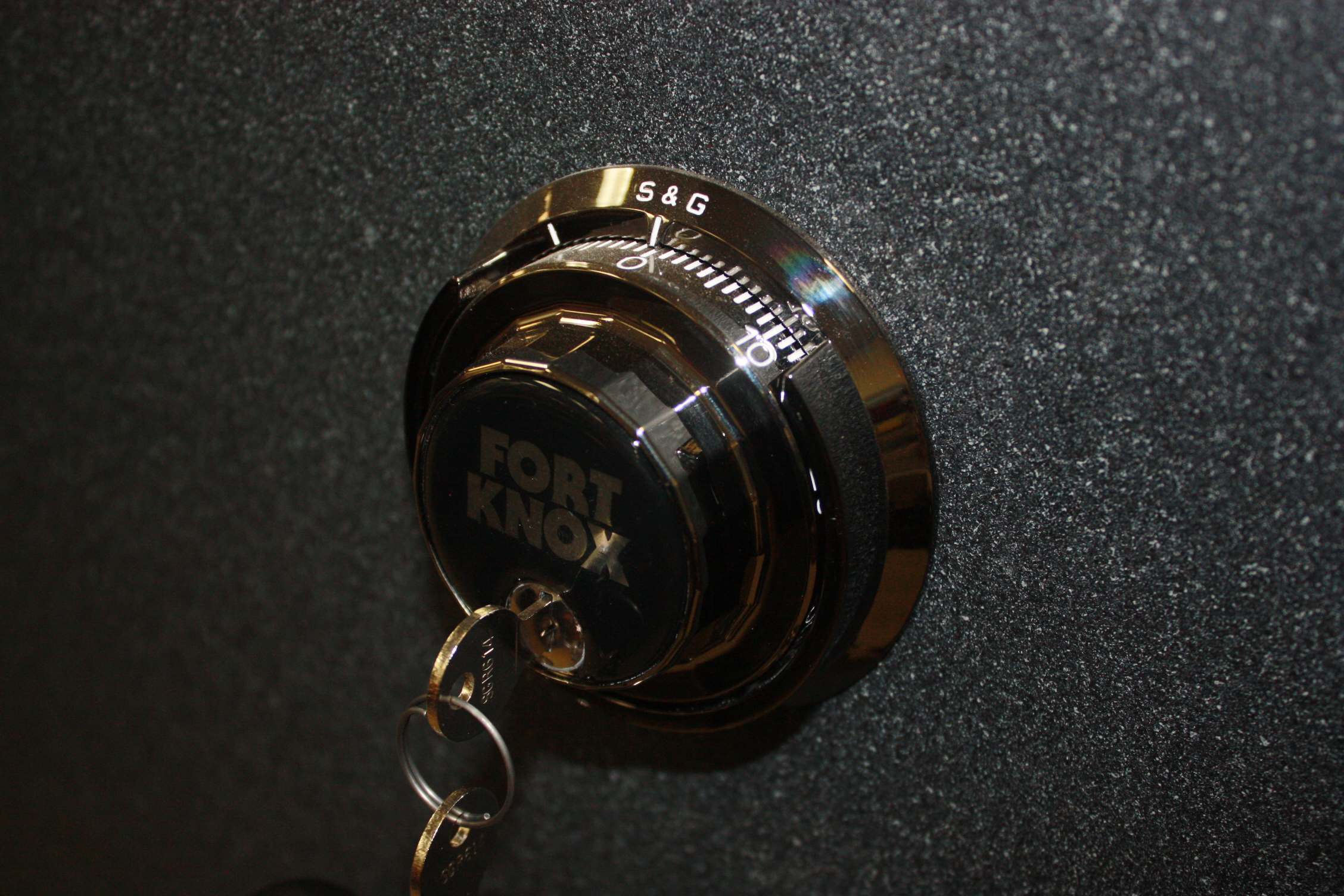
Sargent & Greenleaf combo lock with key-locking dial

To use the key feature properly, close the safe, turn the dial several full turns stopping the dial at “0”, then turn the key 180 degrees and remove it.  The dial is now locked so it cannot be turned.  This is supposed to keep unauthorized people from tampering with the lock.   However, anyone who is skilled enough to manipulate open a combination lock by touch and sound will also be able to pick open that key lock in a few seconds.  The dial lock is also easy to drill open or just force it to turn with a good screwdriver.  Now for the surprising part — most safe manufacturers order their key locking dials so that all of them use the same key!

Now, this is what puts many safe buyers at risk:  It is somewhat common for workers in box stores to show safe buyers how to lock their safes up for “fast unlock”.  With this procedure, you close the safe and lock it by turning the dial clockwise only about 15 numbers to “0”, then turn the key so the dial won’t turn.  Next time, all it takes to unlock the safe is to turn the key back to unlock the dial, turn the dial clockwise 15 numbers, and the safe is unlocked.  Simple and easy!  However . . .

Relatively intelligent burglars know this trick too.  If they find a safe on which the dial has been key-locked, they know there is a pretty good chance that the safe can be opened is just a few seconds.  They can turn the key lock with a pick set, a heavy screwdriver, or even a key that came with another safe made by the same manufacturer.  If the owner is using the “fast open” trick the only other thing to do is turn the dial clockwise.  And then empty the safe.  That is exactly what happened to a local guy who bought his safe from a box store.  He did what the store worker told him to do.  The trick cost him over $20,000 that he thought was secure in his safe.  To get properly educated about safes, buy your safe from people who really know them, not from a box store or a gun store!

EMP and Redundant Safe Locks

Electronic safe locks are definitely faster and easier to use than traditional dial type locks, but some people do not trust their reliability.  Lock failure due to EMP – electromagnetic pulse – is a concern of some people as well.  EMP’s are typically associated with nuclear explosions and specific types of military weapons with the capability of destroying all kinds of electronic systems.  See Wikipedia for information on EMP.

Fort Knox Gun Safe with Redundant Lock System

LaGardbrand redundant safe lock systems are the best solution for these concerns. With the redundant lock arrangement your gun safe will have both an electronic keypad AND a mechanical dial controlling a single lock unit. If the electronic part fails due to EMP, or for any other reason, the dial will still open your safe. You will ALWAYS be able to open your safe! This system has been used in banks for several years, but it is now available on Fort Knox gunsafes. I don’t believe any other gun safe manufacturer offers it, and this “peace of mind” upgrade only costs about $400. It also gives your gun safe a unique appearance that will impress your friends.