Gun Safe Boltworks: Part 2, Bolt Bars

The last post said that the size of the bolts in a gun safe makes no difference in a pry attack, but mentioned that there are other potential weaknesses. Flimsy bolt bars are a major problem in many safes.
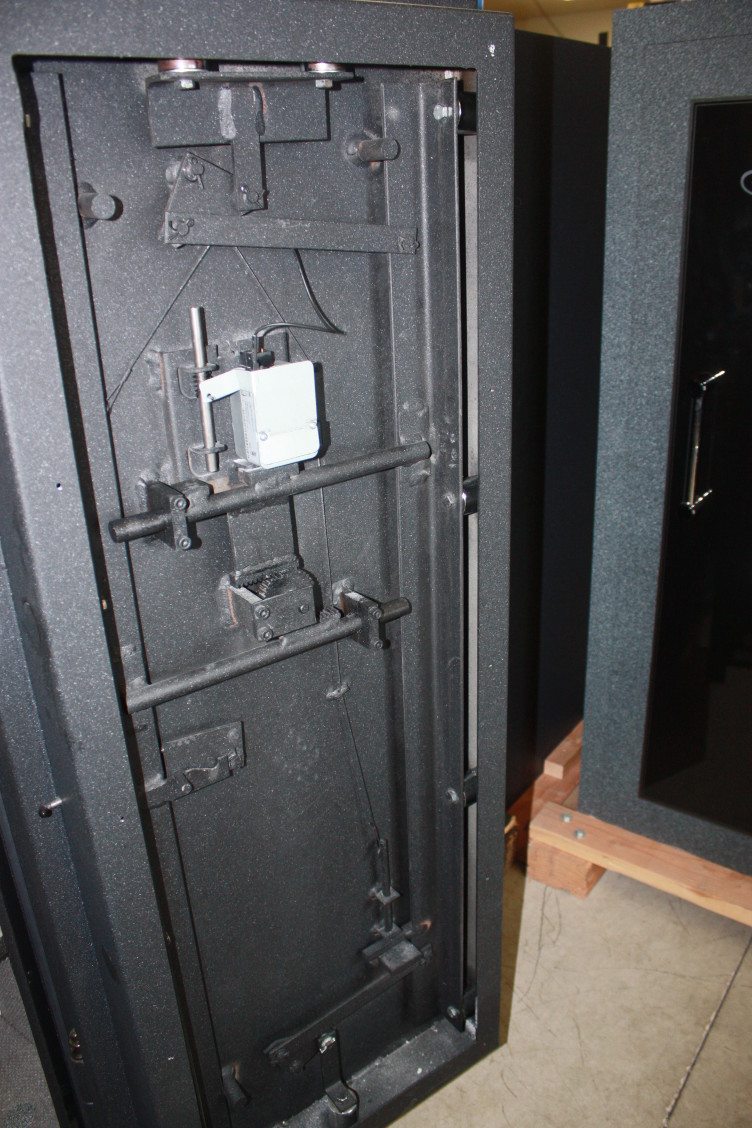
BOLT BARS 001    BOLT BARS 009

The picture on the left shows the bolt bar– the vertical angle iron to which the bolts are attached — from a safe we sell.   The picture on the right shows the bolt bar from a well-known brand of gun safe that we will not sell. The safes are the same size. The bolt bar in the safe on the right is extremely weak compared to the one on the left for four reasons:

  • The one on the left is slightly longer than the one on the right.
  • The one on the left is 23% bigger: 2” x 2” vs. 1.5” x 1.75”.
  • The one on the left is 44% thicker: .1943” VS .1345”.
  • The one on the left is a solid piece of steel, while the other piece has 12 extra holes punched into it, each of which makes the piece weaker.

I believe the extra holes are there so the bolt bar can be used interchangeably in other safe models – good for manufacturing efficiency, bad for security.  Smaller dimensions and thinner steel also keep manufacturing costs down, but they’re bad for security. Take all these things together and there is a huge difference in strength.

Bent Bolts 2

So why is that important? The next picture shows a safe which uses that same flimsy bolt bar. Burglars successfully pried this safe door open.  Pressure from their pry bar caused the bolt bar to bend, which allowed the bolts to fold over enough for the door to open. This manufacturer talks about protecting your valuables, but in reality all they want to do is make more money. They make more money by going cheap on one of the most important pieces in their safes! The same principle applies  to vault doors.  This is why you need to talk with real experts when buying a gun safe, not a box store or a gun dealer who also happens to sell gun safes.
Gun Safe Boltworks: Part 1

Do bigger bolts really make a difference?

One of the biggest misconceptions relating to gun safes  is that “the bigger the bolts are, the more security you have against pry attacks”. The idea is that if someone is trying to pry open your safe, 1” bolts will break before 1 .25” bolts, and those would break before 1.5” bolts. Bigger bolts do look more impressive, but they are primarily cosmetic. Manufacturers use larger bolts to differentiate between lower priced and higher priced safes.

Consider this: If you are towing a 5000# trailer where you are stopping, starting, slamming on the breaks, etc., your whole rig is usually held together by just one 5/8” bolt in the hitch. Ever hear of that bolt breaking? So how would someone break the bolts on a gun safe or vault door, even with a long pry bar?

Bigger bolts make no difference in prying attacks – the weakness is somewhere else. The next post will tell how prying attacks DO open some gun safes.

P.S. It is appropriate to note that if someone uses power tools to cut through the edge of a safe door, then cuts completely through the safe bolts, bigger is better. But this kind of attack is extremely rare and doesn’t even make sense. Someone with that kind of tool will go through the side of the safe much quicker.

Customize Your Fort Knox Gun Safe

Most brands of gun safes are mass produced with little or no flexibility in colors or options. Fort Knox gun safes (excluding the Maverick series) can be customized to create your own one-of-kind safe that truly reflects your needs and taste. Here are some of the options Fort Knox gives you:

  • Nine sizes of gun safes
  • Internal or external hinges, on the left or right
  • Three textured paint colors and thirteen high gloss paint colors
  • Two tone paint schemes or custom blended colors
  • Eight interior configurations, with five fabric selections
  • Door organizers or Velcro compatible inside door panels
  • Two interior light packages
  • Multiple different graphics packages
  • Up-graded fire protection
  • Add extra steel to the safe body and/or the door – you decide how much
  • Add stainless steel or Armaknox Ballistic AR500 steel
  • Add corner bolts to units that don’t normally have them
  • Pull handles to make opening a heavy safe door easier
  • Locks: Group 2, Group 1, electronic or redundant
  • All kinds of accessories and extras: Mirror inside back wall; jewelry drawers; pistol pockets & storage bags; carpeted pedestals; humidity control, etc.

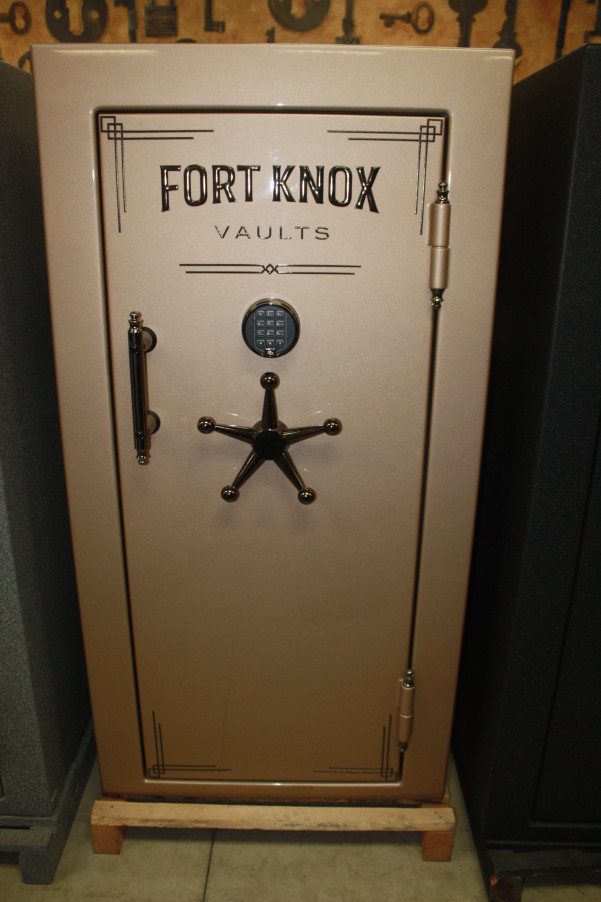
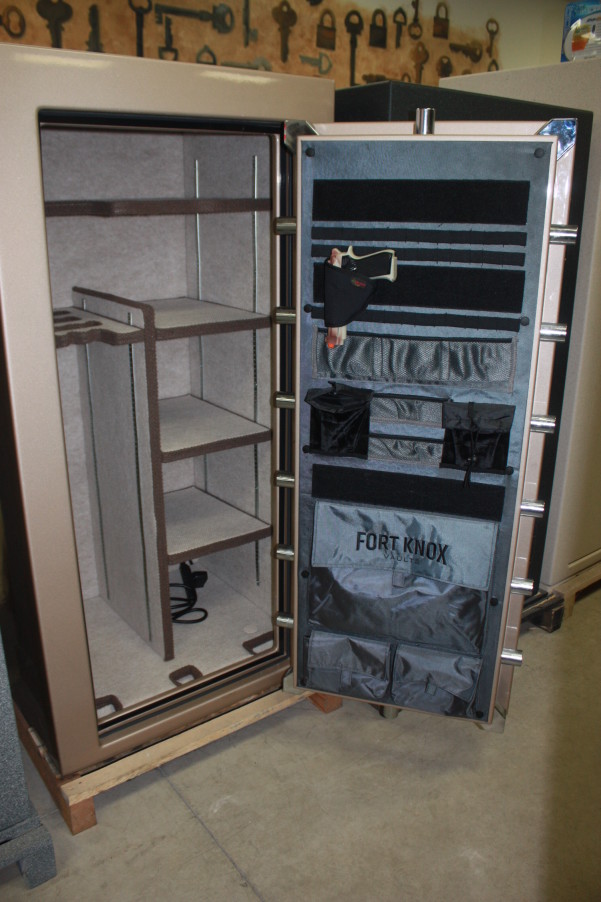
FORT KNOX BLOG 002FORT KNOX BLOG 006

The safe shown is a Fort Knox Guardian 6031 in Champaign color, with black chrome hardware & trim, and beige interior. Options include external hinges, pull handle, raised double diamond graphics, electronic lock, internal lights and an inner steel lining of 10 gauge steel. Standard features include the 5 spoke handle, corner bolts, door organizer, internal electric plug, etc.

Everyone’s needs and preferences are different: You store gold, your friend stores silver; you have 47 valuable rare rifles, your friend has 5 low end shotguns; you like black, he likes green; your safe will be a showpiece where everyone sees it, his will be hidden in the furnace room; you keep lots of cash at home, he doesn’t. You need more protection than your friend and you want to project your personality. Don’t buy the same (inferior) gun safe that everyone else buys at the local box store. Work with your Fort Knox dealer to design something special – something with real protection and style.

Used Round Door / Square Door Safes

In past years a particular type of two-door commercial safe was common in grocery stores. A large fire rated compartment, for cash register trays and paper work, had a big square door. This compartment was usually on the bottom.

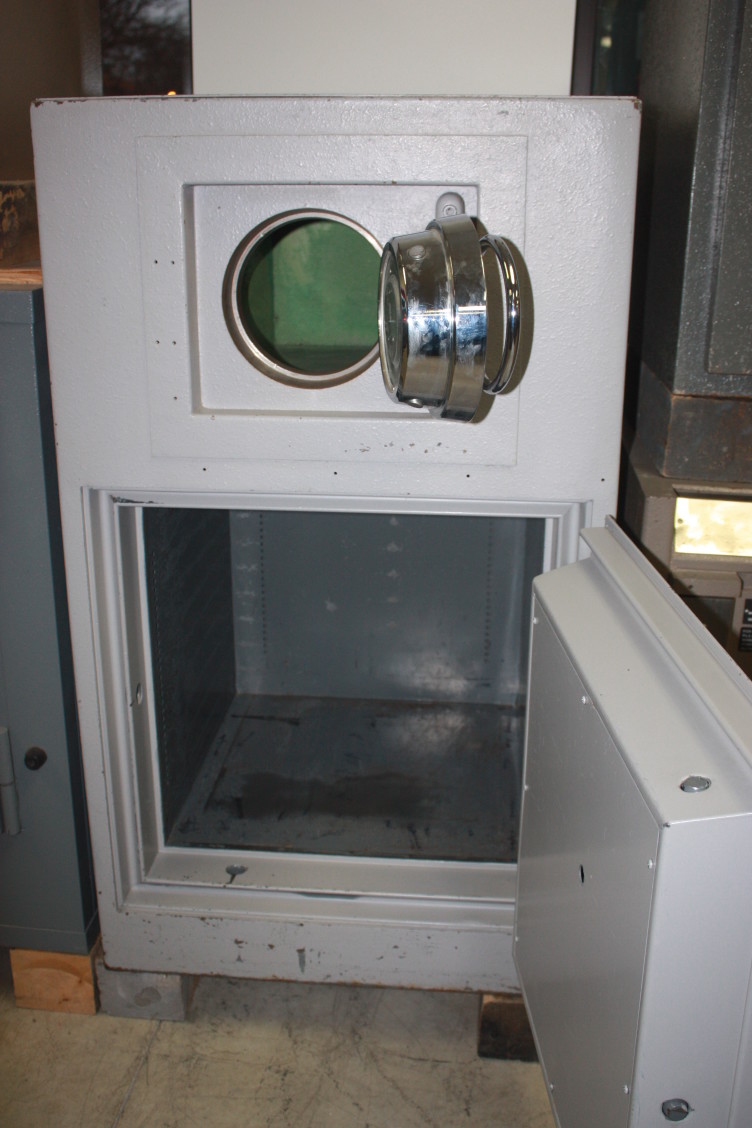
Large amounts of cash, like the day’s bank deposits, were kept in a small top compartment, which usually had a small round door. This high security money chest (usually TL rated) has a heavy plate steel body which is encased in about 200# of concrete.

ROUND SQUARE DOOR 003ROUND SQUARE DOOR 006

A single outer steel skin encloses both safes into a single unit. If the money chest is on top the units are top heavy and tricky to move. Weight requires these double units to be placed on concrete floors.

These units fell out of favor about twenty years ago because the high security compartment is too small. In addition, it is difficult to fit round doors with electronic locks. Stores seldom want these safes anymore, so that creates an opportunity for homeowners: Used round door /square door safes are readily available at safe shops for reasonable prices. Protect your personal papers from fire in the fire rated lower part, while your cash, silver and gold is safe from burglars in the high security money chest.

Used High Security Safes for Silver and Gold

Tom’s two general rules about safe prices: 1) You can get fire protection relatively cheap or you can get burglary resistance relatively cheap, but the price of both fire and burglary will be relatively high; 2) Good quality used safes will save you a significant amount of money.

Here is a scenario we see often: A couple has been gradually (or suddenly) converting much of their personal wealth into silver and gold, to protect their life savings from a financial market collapse. They also want to prevent the government from knowing too much about their business. But they want to buy a cheap safe. They want to store a large portion of their life savings in a “garage sale price” safe. That doesn’t make sense. And they usually are more concerned about fire than break-in, so they buy a fire safe.

Plate steel safes 023Plate steel safes 029

If you buy coins with numismatic value, or it they are in plastic cases or presentation boxes, then fire and smoke protection is important. But if you are just buying rounds, bars or bulk silver coins I recommend a used plate steel high security unit. A used safe with 1” or 1 ½” of solid steel on the door and a “TL” rating will get you outstanding burglary resistance at a reasonable price. It is extremely unlikely that your metals would melt in a safe that did not have fire protection because the melting points are high. Following are melting temps for typical investment grade metals.

Gold, 24K                     1945 F
Silver, pure                  1761 F
Silver, coin                  1615 F
Silver, sterling             1640 F

The used safe shown on the left is small, 10 x 12 x 16, perfect for hiding under a cardboard box in a closet.  But it has a TL-15 rating and it weighs 250#!  Steel on the front is 2″ thick and the rest is 1″ thick.  The other unit is 22 x 22 x 25, a TL-15 rated safe with a 1 1/2″ solid steel door  — it weighs 910#.  These units are great for low volume/high value contents like silver or gold.