FIRE SAFES VS. FIRE/BURGLARY SAFES: THE DIFFERENCES

The last post was about what makes gun safes different from fire safes or fire/burglary safes. So what are the differences between a fire safe and a fire/burglary safe?

Fire safes are geared toward protection against fire, but that is only for fire. These are the products you find at box stores. Many of these products are rated by Underwriters Laboratories for one or two hours. But the fire rating can be accomplished with paper thin steel or even plastic safe bodies. Better units may also be “drop tested”, in which they are dropped 30 feet onto concrete while still hot from the fire test.  These safes may have good locks, but frequently the locks are very low security and made of plastic.  Lock bolts are normal small, few in number and often made of pot metal.

Most fire safes are on the small side, made for residential use. Some commercial units, however, are up to 80 inches tall and wide enough to require two doors. These giants normally still have steel that is only about 14 gauge thick. The composite insulation in fire safes is usually relatively light-weight and is made to retain moisture.

Fire/burglary safes are obviously intended to keep burglars from breaking in, in addition to providing reasonable fire resistance. To enable the safe to stand up to drills, cutting tools and prying tools the steel is typically heavier – 11 gauge, 10 gauge or 3/16 are common.  Lock bolts will be large and made of solid steel.  The composite material is likely more dense, too. The denser material may contain stones or other things to make drilling more difficult, and these materials resist sledge hammers better. There is a trade-off, however, in that the denser composite is not as fire resistant as the lighter material. So when you get better burglary resistance, you probably only get 30 minutes, or a maximum 60 minutes of fire protection.  Fire/burglary safes will always have good locks.

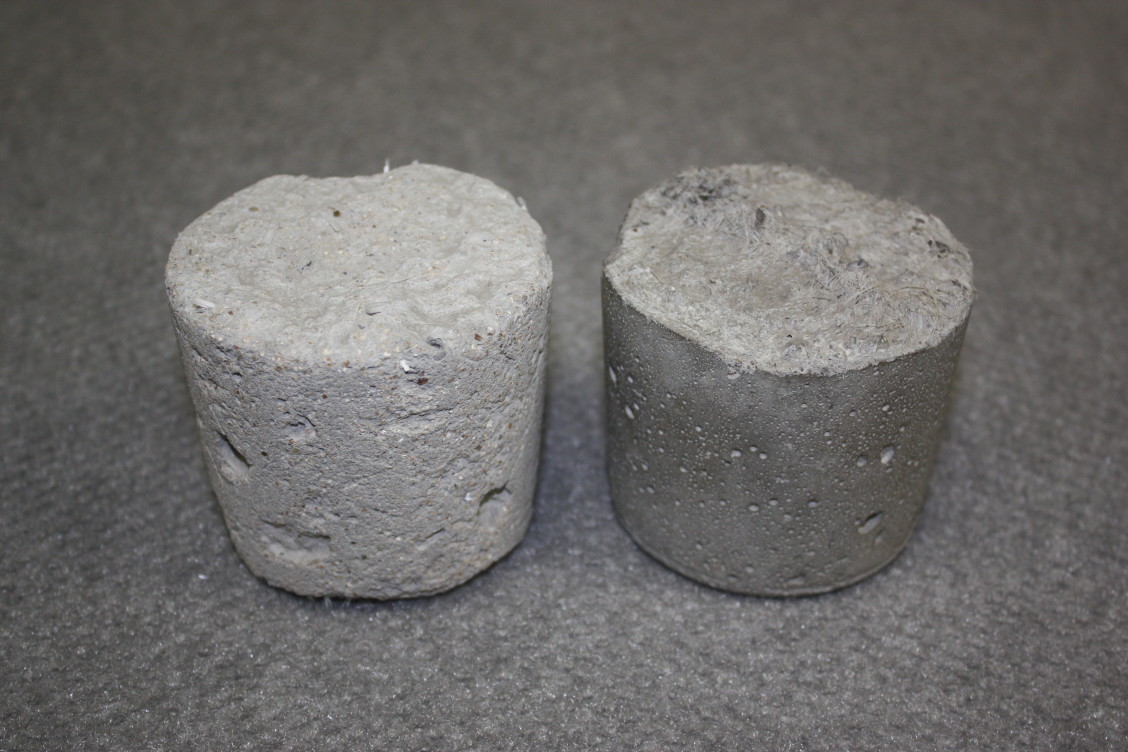
Composite samples 623 Composite samples 618

One picture above shows 14 gauge steel which is common on fire safes, compared to 10 gauge which is common on fire/burglary units — 10 Gauge is 80% thicker. The other picture shows samples of the two composite materials used by one safe manufacturer. The more effective fire insulation, left, weighs 0.5 pounds. The more burglary resistant material on the right weighs 1.5 pounds.

When looking for a safe think about what you want it to do. If you only want it to protect papers from fire, a unit from a box store may be OK. If you want it to provide security against theft, then get guidance from a knowledgeable safe dealer.

Fire & Fire/Burglary Safes VS. Gun Safes: Big Differences

The vast majority of fire or fire/burglary safes, are built with an outer steel shell and an inner steel shell. The space between the steel layers is filled with a poured-in composite material similar to concrete. (Note that box stores frequently sell safes with plastic inner linings, and even plastic on the outside — don’t waste your money.) Photo on left shows a high quality Gardall fire safe, with steel interior and poured in composite insulation.

INTERIOR STEEL WALLS 004INTERIOR STEEL WALLS 008


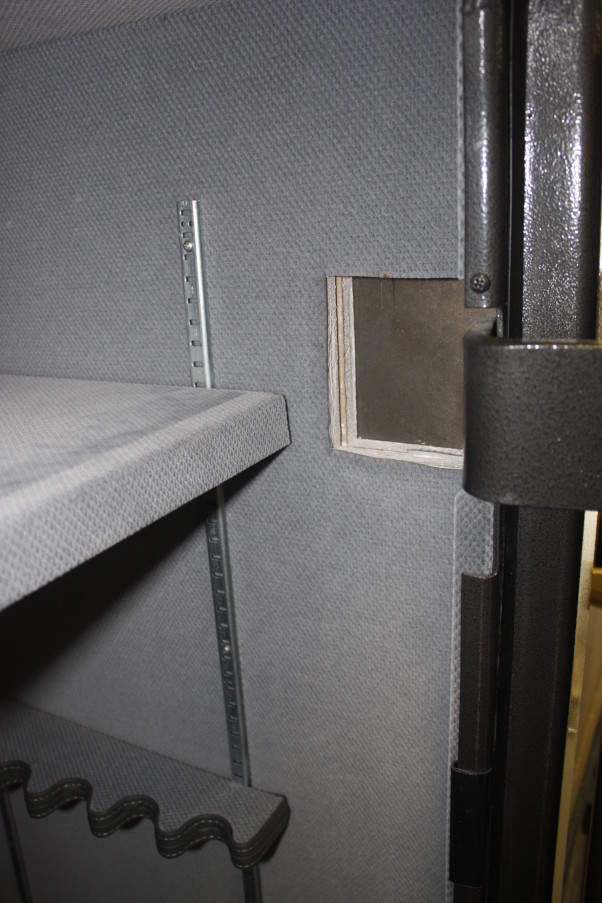
Almost all gun safes consist of an outer steel shell lined on the inside with drywall, and no inner steel. Most use Type X drywall which contracts and breaks into pieces during a fire. Drywall is a poor insulator compared to the poured-in composite. That causes manufacturers to misrepresent their fire ratings. Photo on right is a typical gun safe – fabric covered drywall, no inner steel.

Most quality fire safes have an Underwriters Laboratories fire rating of one or two hours. These safes have been tested independently under standard procedures at temperatures up to 1700 and 1800 degrees, respectively. Some have also undergone a 30 foot drop test. Imported units are normally tested according to Korean or Japanese standards, which are similar to U.L.’s. Gun safes will rarely pass U.L. tests so most manufacturers and importers do their own tests, or they make up numbers without testing. They often mislead consumers by mentioning “U.L. Rated”, but the U.L. rating they refer to has nothing to do with fire.

There are all kinds of ways to cheat when you test your own product. I have been told by people who worked there, that one company actually caulks the door shut during their fire test. Another way to fudge is to put the inside temp recorders in the bottom of the test unit where temps are lowest. Putting some kind of thermal barrier in front of the safe during the test also works well. For instance, remember how effectively even a sheet of paper blocks radiant heat coming off a camp fire.

If you want to protect papers or cash in a safe with the very best fire ratings available, you really should not get a gun safe. If a gun safe with inner steel and poured-in composite makes sense to you, look at Graffunder safes or Amsec’s BF series.

Gun Safes With Palusol Seals: Part 2

“Palusol”, which is a trademark of Odice, LLC, is the brand of intumescent seal used on most gun safes. When exposed to heat from a fire the product’s thermoplastic covering melts. The underlying material then expands as a foam which makes a barrier to prevent heat and smoke from entering the safe. Palusol is a great product, but there are limitations.

PALUSOL SEALS 002

Shown left to right are three types of Palusol: “PL”; “PM”, what most safe manufacturers use; and “EFV”, which has two small fins on it.

A miner issue is that sometimes the safe manufacturer’s employees do not handle the product carefully. Dirty hands, oil or drywall dust sometime keep Palusol’s adhesive tape from sticking to the safe. The Palusol then peels off and the consumer needs to glue it back into place.

More importantly, doors on some gun safes fit so poorly that the gap between the door and the frame is too big for Palusol to fill when it expands. In this case, heat and smoke will be allowed to enter the safe even after the seal expands.

Odice’s sales material states that for best protection, Palusol PM should be installed flush in a routed groove to direct the expansion of the material properly. None of the safe manufacturers install Palusol this way.

Odice says that Palusol should not be exposed to temperatures greater than 104 degrees for extended lengths of time. It seems, then, that Palusol might lose its effectiveness when the gun safe is in a garage in a part of the country where the temps get that hot.

Here is the biggest problem: Odice states that Palusol is activated at temps between 212 and 302 degrees F. That means that smoke and heat perhaps as high as 300 degrees can pour into most gun safes until the seal’s thermoplastic melts and the inner material expands. In many house fires one part of the house can burn while other areas do not. But the black sooty smoke infiltrates the entire house, and the safe. We have seen a number of gun safes which were not damaged by heat, but whose contents were destroyed by smoke and low level heat, because the seals did not get hot enough to expand.

Gun Safe Seals 001

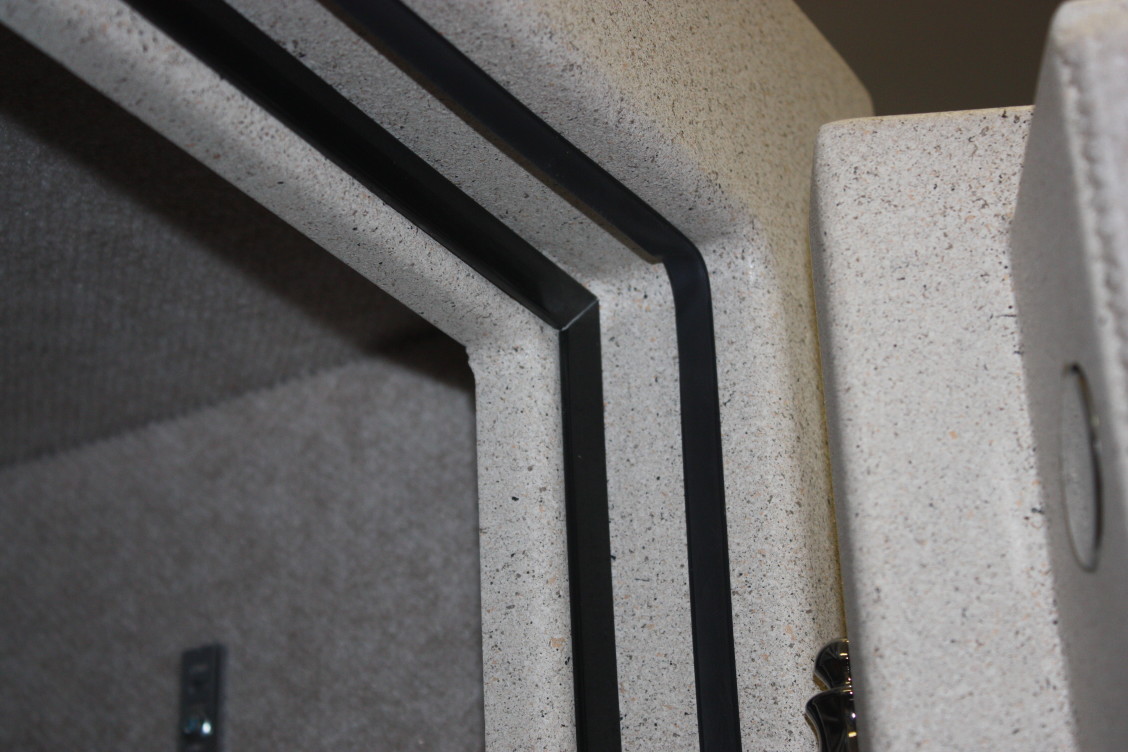
So then how do you get real fire protection? Buy a gun safe with a door that fits well, and which has two seals. A cold seal or smoke seal is critical because it works all the time – before the expanding seal actually expands. Pictured above is the frame of a Fort Knox Defender. The black stripe on the left is Palusol PM, but to the right is a fire resistant fin-type seal which makes the safe airtight all the time. Infiltration of smoke, and air from 212 F to 302 F, will be greatly reduced.  On American Security safes there is a foam compression-type seal which accomplishes the same thing.  But most gun safes, even expensive ones, do not have the important second seal.

Seals on Gun Safes: What Exactly is Palusol?

Most gun safe manufacturers use Palusol brand intumescent fire seals, commonly called the “expanding heat seal”. Palusol is a copyrighted trademark of Odice, LLC. There are several variations of the product with slightly different characteristics, and several thicknesses are available. I believe most gun safe and vault door manufacturers use the “PM” product.

According to Odice’s sales materials, Palusol PM is hydrated sodium silicate material coated on both sides with epoxy resin, the core is reinforced with glass fiber. It is encapsulated in a rigid thermoplastic profile. Self-adhesive tape on the back allows quick installation. The appearance of this seal is a shiny clean straight line on the edge of the door or on the frame of the gun safe.  At least one manufacturer uses a variation that comes in rolls rather than rigid strips; it saves time in production, but looks cheap.  Pictured is the edge of an American Security BF safe door showing the rigid version Palusol seal right behind the 1/2″ plate steel door front.  Tape over the corner keeps the strips from coming loose.  In addition, taping over the cut ends of the Palusol prevents air and moisture infiltration which can cause deterioration of the product.

DOOR EDGE STEEL 005

When exposed to fire Palusol’s thermoplastic covering melts. That allows the sodium silicate material to expand, filling in gaps between the door and frame of the safe. It becomes a rigid non-combustible foam with a high level of thermal insulation. According to Odice this expansion is equal to, or greater than, five times the material’s original thickness (not eight times thicker as claimed by a number of gun safe manufacturers). This makes for a barrier to the passage of fire, hot gasses, smoke, etc.  Palusol has been tested by independent labs.  Under normal conditions it has been shown to be effective for at least 25 years.

The next post will talk about the limitations of Palusol seals in most gun safes.

How To Fix Cheap Shelves in a Gun Safe

Cheap gun safes, especially Chinese made safes that are sold in big box stores, almost always have weak shelves.  The shelves are made of inferior particle board which is thinner than it should be, so the selves hold very little weight before they sag or break.  I have seen brand new Chinese made safes that sag just from their own weight.  Naturally, the wider the safe is this worse the problem becomes.

SHELF SUPPORTS 002 SHELF SUPPORTS 006

In my opinion it should not be necessary to fix a problem like that with a new safe, or avoid using the shelf for fear of it breaking, but there is an easy fix.  The clips that the shelves rest on are usually 1/2” or 5/8” wide.  At your local home improvement store buy some metal u-channel or square tubing that is big enough to go over the clips.  Cut the material to the correct length and slip it over the clips on both sides of the safe.  Your shelves will then lay flat and hold much more weight than before.

Fort Knox being a quality oriented company uses better, thicker shelving material.  And on 51” or 61” wide safes they install tubing for support at the factory.  As I always tell people, don’t save a few dollars by buying Chines made junk – buy an American made gun safe from one of the few trustworthy manufacturers.