Relock Devices on Safes: Internal Relockers

Most safe manufacturers tell you that they have relock devices in their safes, but they never tell you what one is or what it does.

The most common form of relocker is the “internal” relocker.  “Internal” because it is located inside the lock body on safe locks that are rated Group 2 or higher.  Burglars attempting to break into a safe will frequently smash the lock dial on the outside of the safe with a hammer, bat or anything else they can swing.  The force of that blow will drive the dial spindle back into the safe, against the back cover of the lock body. The lock body is located inside the safe door.  Enough force will cause the back cover to break away along a line that is intentionally made weak by the lock manufacturer.   When this occurs a spring loaded “relock trigger” pops into a hole in the lock bolt.  The lock bolt is the part that actually keeps your safe locked, by preventing the big bolts in the door edge from being pushed back in.  With the relock trigger in that hole, then the lock bolt is deadlocked and cannot be forced to unlock.

RELOCKERS 003RELOCKERS 009

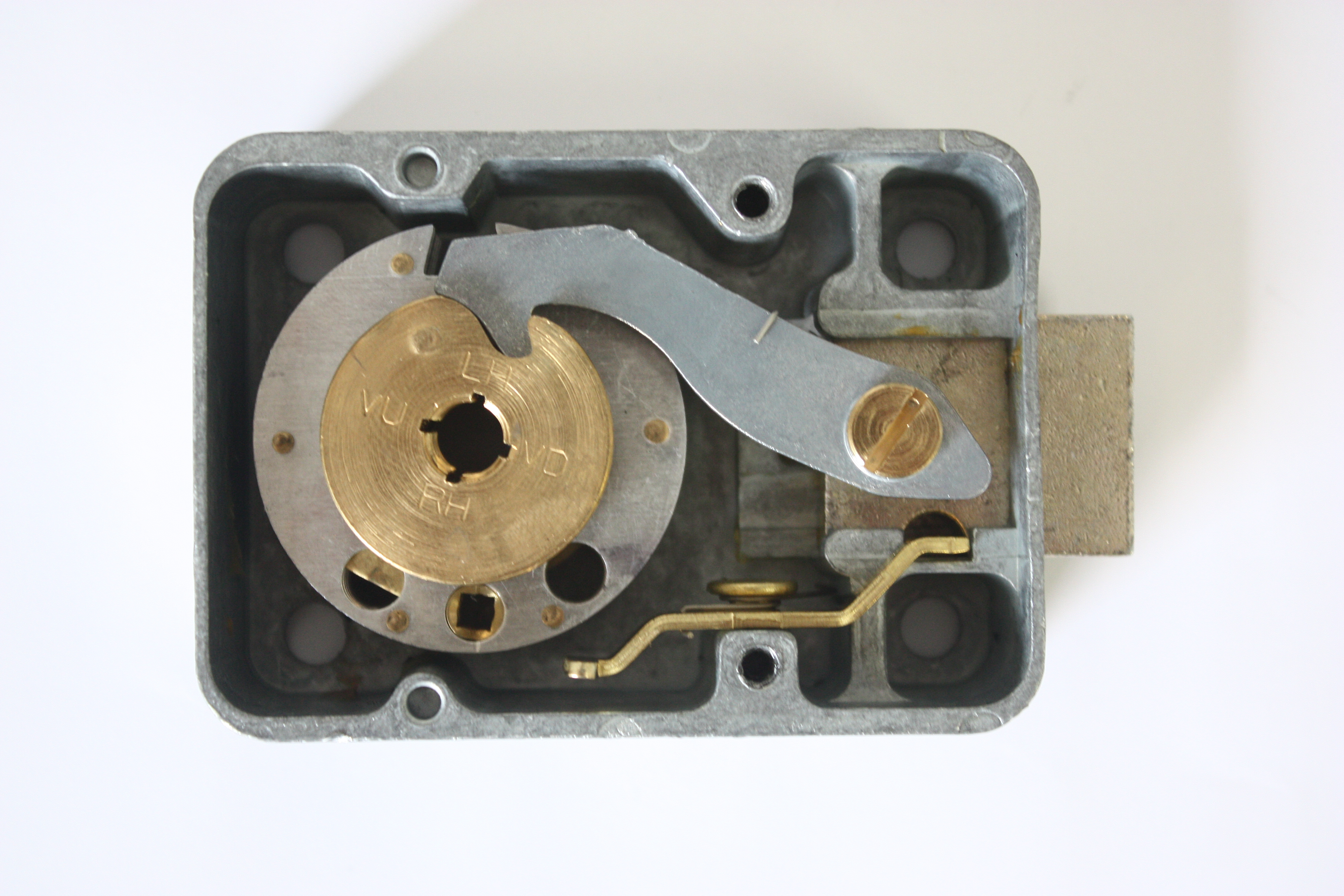
Picture on left shows back cover of S&G Group 2 lock.  Picture on right shows lock with cover removed.  Relocker is the angled brass piece in lower right.  Since the lock cover is removed the relocker is “fired”, and you can see the right end of it is in the hole on the lock bolt.

If the relocker is set off this way a burglar is much less likely to get into your safe.  You will not be able to open it either.  An experienced safe technician will be able to open your safe and make it useable again.  Note that most locksmiths are not skilled at opening locked safes, especially when a relocker has been set off.

Next posting will be on external relockers.

Beware of Dishonest Gun Safe Sellers

A representative from a safe importer called last week wanting to set up an appointment to show off a variety of safes that are mounted in a “traveling showroom”.  He is signing up dealers to sell their Chinese and Korean built products.  I stated very directly that in the last four contacts with his company, at SHOT Shows and in phone calls, their company’s reps misrepresented or flagrantly lied about the products they were selling.  He stated that if that had happened, it certainly had been some kind of simple misunderstanding.  Anyway, he said, it can’t hurt to just look at their safes and judge the quality.

So yesterday the rep visited our shop with the cube truck sporting an assortment of their products.  He was excitedly explaining that their Chinese built gun safes were far superior to everyone else’s Chinese built gun safes because “These lines of gun safes have bodies made of 10 gauge and 8 gauge steel” rather than 12 and 14 gauge steel like the others.  On opening the door to the first safe and feeling the steel I immediately told him that the steel was not 10 gauge, that they had again lied, or at least stupidly misrepresented their product.  He was offended and called the home office for reassurance.  But I measured the steel with a micrometer and proved to the rep that his gun safes were, in fact, 12 gauge steel, just like everyone else’s cheap Chinese gun safes.  He went on to make a number of other false statements before leaving.

The problem is that this company is going around signing up dealers who apparently do not question what they are told.  These dealers then sell inferior products to consumers who are told that they are paying for better protection.  When you plan to buy a quality gun safe, ask the seller enough questions that you can be certain he is knowledgeable and honest.  And do not trust any safe which was built in China.

Cheap Gun Safes with Combination Locks

If you are looking to buy a cheap gun safe with a dial-type lock, be careful.  Cheap units with dial locks frequently use what is called a “direct entry” lock system.  These are much less secure than a safe with a Group 2 dial lock.  Try this:  With one hand put pressure on the safe handle, and with the other hand turn the lock dial.  If you feel the lock turning with the hand on the handle, then it is a direct entry lock.  An experienced person can determine the combination when he can feel what is going on inside the lock.  The picture below is the inside of a very cheap direct entry lock system.  The round silver parts near the top are the three lock wheels.  The slot going from the center to the outside edge of the wheel corresponds with one of the numbers on the dial.  You can determine the lock combination when you feel the openings on the wheels through the safe handle.

img070

When a safe has a Group 2 lock you cannot feel the lock through the handle.  These locks, as well as the whole locking system, provide much more protection.  Naturally, they cost more, too.  Spend more money — buy a quality safe with a Group 2 lock if you want your safe to provide real burglary protection.

American Made Gun Safes

Does “Made in America” mean anything to you?  It does to us.  We proudly take a stand on this issue.  Of the 45 gun safes we have in our showroom, only one is imported.  We do not sell that model very often, but comparing it with U.S. made safes helps to sell higher quality products.  The differences are huge.

American Made 003

Shopping for cars may be different.  American cars are full of parts from China, Mexico, Korea and who knows where.  Likewise, foreign car brands have significant American content.  But a Chinese made safe is all Chinese.  We as a country are too anxious to sacrifice quality — and American jobs – to save a few dollars.  And then we complain about lack of jobs, low wages, etc.  Do you think that we get a fair “social trade” with China?  Our shop sells American made Fort Knox, Amsec and Graffunder gun safes, for good reason.  But if you don’t like these, then buy a U.S. made Browning, Champion, Heritage or Liberty.  Check closely for country of origin because they all have imported models, too.  Take a stand to help keep jobs in The States – BUY AMERICAN!!

Key-Locking Safe Dials

Key locking dials on combination locks are sold as security upgrades, especially on gun safes.  Safe buyers are rarely informed of their limitations, however, and misinformation sometimes actually jeopardizes the safe buyer’s valuables.

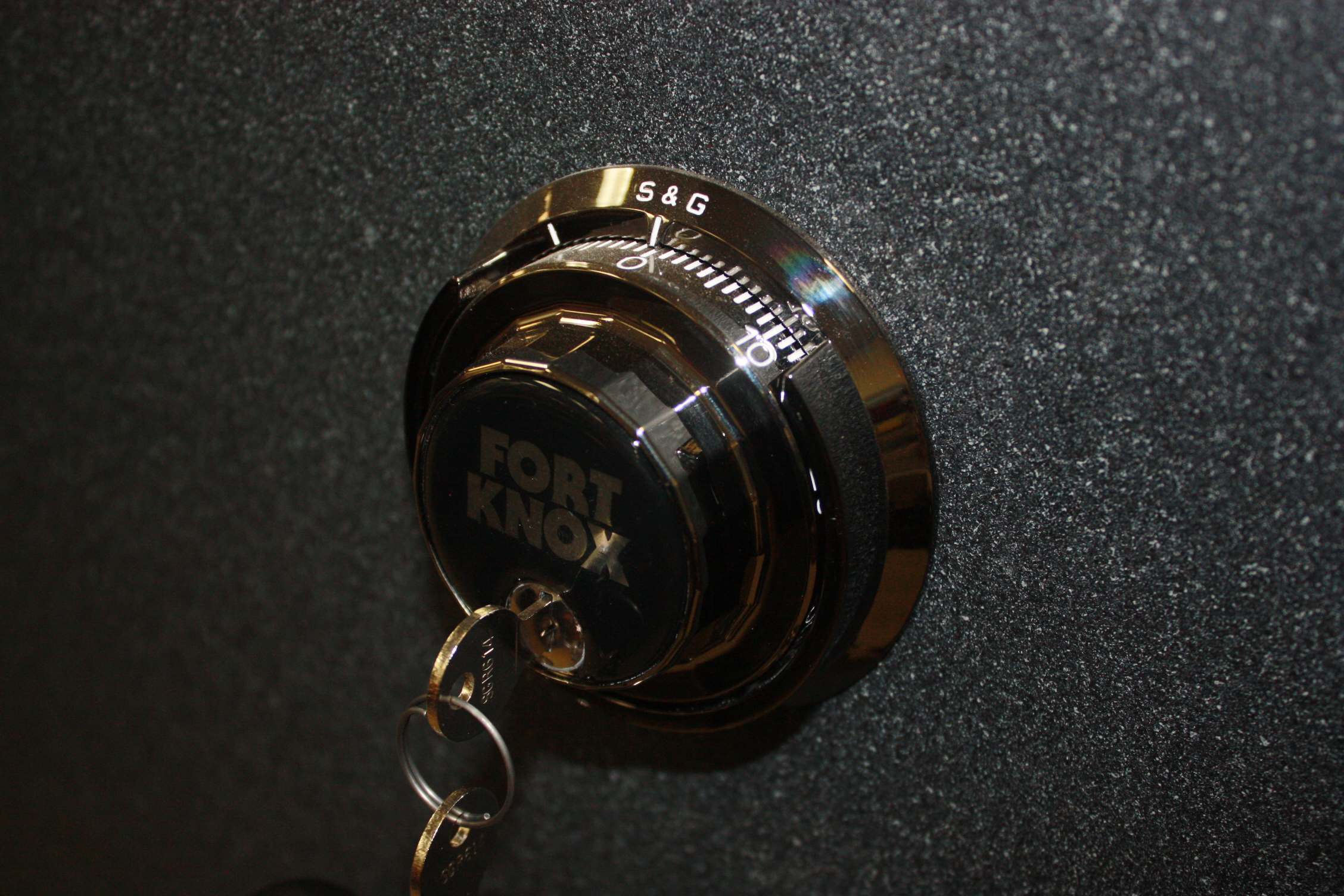
Sargent & Greenleaf combo lock with key-locking dial

To use the key feature properly, close the safe, turn the dial several full turns stopping the dial at “0”, then turn the key 180 degrees and remove it.  The dial is now locked so it cannot be turned.  This is supposed to keep unauthorized people from tampering with the lock.   However, anyone who is skilled enough to manipulate open a combination lock by touch and sound will also be able to pick open that key lock in a few seconds.  The dial lock is also easy to drill open or just force it to turn with a good screwdriver.  Now for the surprising part — most safe manufacturers order their key locking dials so that all of them use the same key!

Now, this is what puts many safe buyers at risk:  It is somewhat common for workers in box stores to show safe buyers how to lock their safes up for “fast unlock”.  With this procedure, you close the safe and lock it by turning the dial clockwise only about 15 numbers to “0”, then turn the key so the dial won’t turn.  Next time, all it takes to unlock the safe is to turn the key back to unlock the dial, turn the dial clockwise 15 numbers, and the safe is unlocked.  Simple and easy!  However . . .

Relatively intelligent burglars know this trick too.  If they find a safe on which the dial has been key-locked, they know there is a pretty good chance that the safe can be opened is just a few seconds.  They can turn the key lock with a pick set, a heavy screwdriver, or even a key that came with another safe made by the same manufacturer.  If the owner is using the “fast open” trick the only other thing to do is turn the dial clockwise.  And then empty the safe.  That is exactly what happened to a local guy who bought his safe from a box store.  He did what the store worker told him to do.  The trick cost him over $20,000 that he thought was secure in his safe.  To get properly educated about safes, buy your safe from people who really know them, not from a box store or a gun store!