Cheap Gun Safes with Combination Locks

If you are looking to buy a cheap gun safe with a dial-type lock, be careful.  Cheap units with dial locks frequently use what is called a “direct entry” lock system.  These are much less secure than a safe with a Group 2 dial lock.  Try this:  With one hand put pressure on the safe handle, and with the other hand turn the lock dial.  If you feel the lock turning with the hand on the handle, then it is a direct entry lock.  An experienced person can determine the combination when he can feel what is going on inside the lock.  The picture below is the inside of a very cheap direct entry lock system.  The round silver parts near the top are the three lock wheels.  The slot going from the center to the outside edge of the wheel corresponds with one of the numbers on the dial.  You can determine the lock combination when you feel the openings on the wheels through the safe handle.

img070

When a safe has a Group 2 lock you cannot feel the lock through the handle.  These locks, as well as the whole locking system, provide much more protection.  Naturally, they cost more, too.  Spend more money — buy a quality safe with a Group 2 lock if you want your safe to provide real burglary protection.
Key-Locking Safe Dials

Key locking dials on combination locks are sold as security upgrades, especially on gun safes.  Safe buyers are rarely informed of their limitations, however, and misinformation sometimes actually jeopardizes the safe buyer’s valuables.

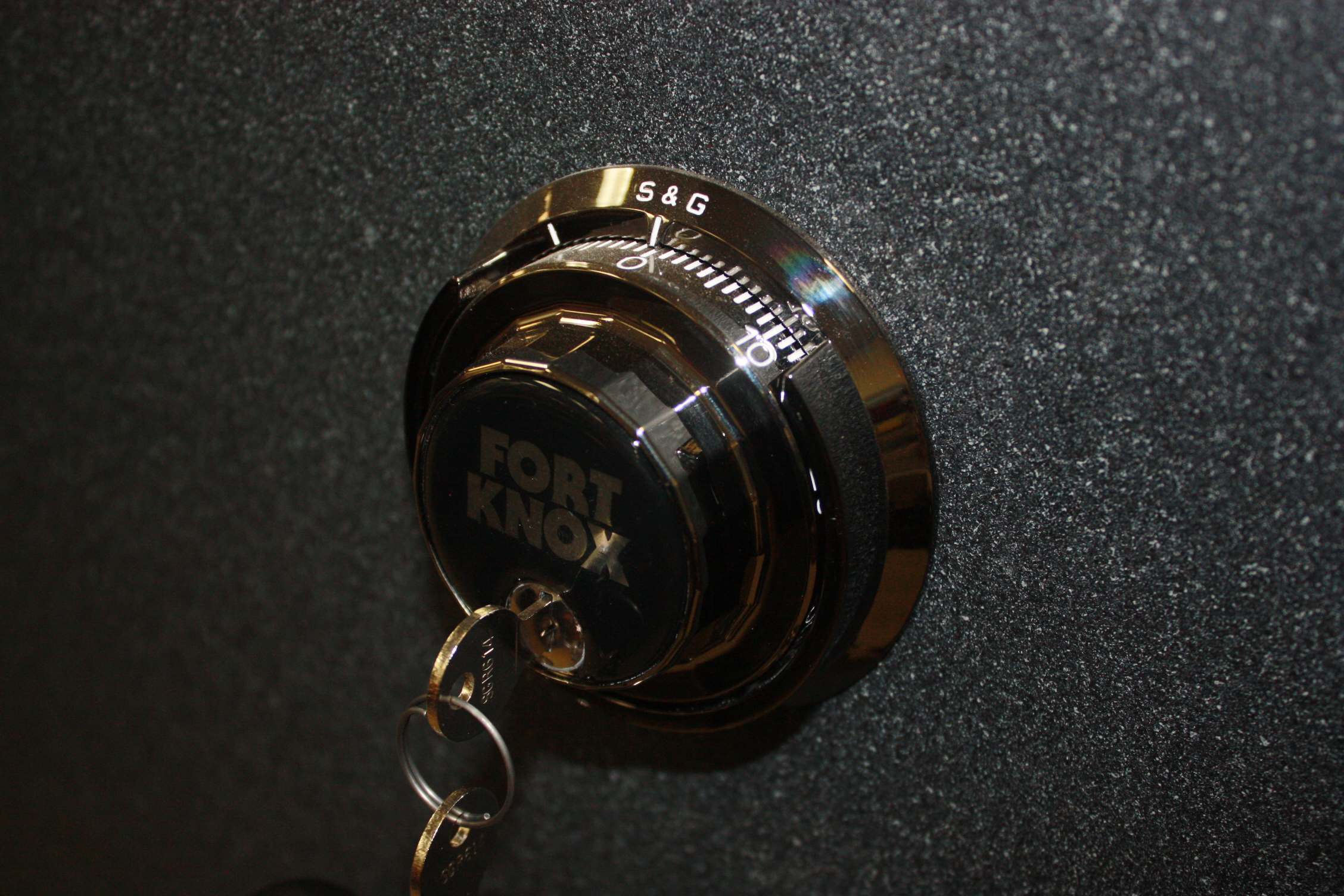
Sargent & Greenleaf combo lock with key-locking dial

To use the key feature properly, close the safe, turn the dial several full turns stopping the dial at “0”, then turn the key 180 degrees and remove it.  The dial is now locked so it cannot be turned.  This is supposed to keep unauthorized people from tampering with the lock.   However, anyone who is skilled enough to manipulate open a combination lock by touch and sound will also be able to pick open that key lock in a few seconds.  The dial lock is also easy to drill open or just force it to turn with a good screwdriver.  Now for the surprising part — most safe manufacturers order their key locking dials so that all of them use the same key!

Now, this is what puts many safe buyers at risk:  It is somewhat common for workers in box stores to show safe buyers how to lock their safes up for “fast unlock”.  With this procedure, you close the safe and lock it by turning the dial clockwise only about 15 numbers to “0”, then turn the key so the dial won’t turn.  Next time, all it takes to unlock the safe is to turn the key back to unlock the dial, turn the dial clockwise 15 numbers, and the safe is unlocked.  Simple and easy!  However . . .

Relatively intelligent burglars know this trick too.  If they find a safe on which the dial has been key-locked, they know there is a pretty good chance that the safe can be opened is just a few seconds.  They can turn the key lock with a pick set, a heavy screwdriver, or even a key that came with another safe made by the same manufacturer.  If the owner is using the “fast open” trick the only other thing to do is turn the dial clockwise.  And then empty the safe.  That is exactly what happened to a local guy who bought his safe from a box store.  He did what the store worker told him to do.  The trick cost him over $20,000 that he thought was secure in his safe.  To get properly educated about safes, buy your safe from people who really know them, not from a box store or a gun store!

Gun Safes: Other Types of Insulation

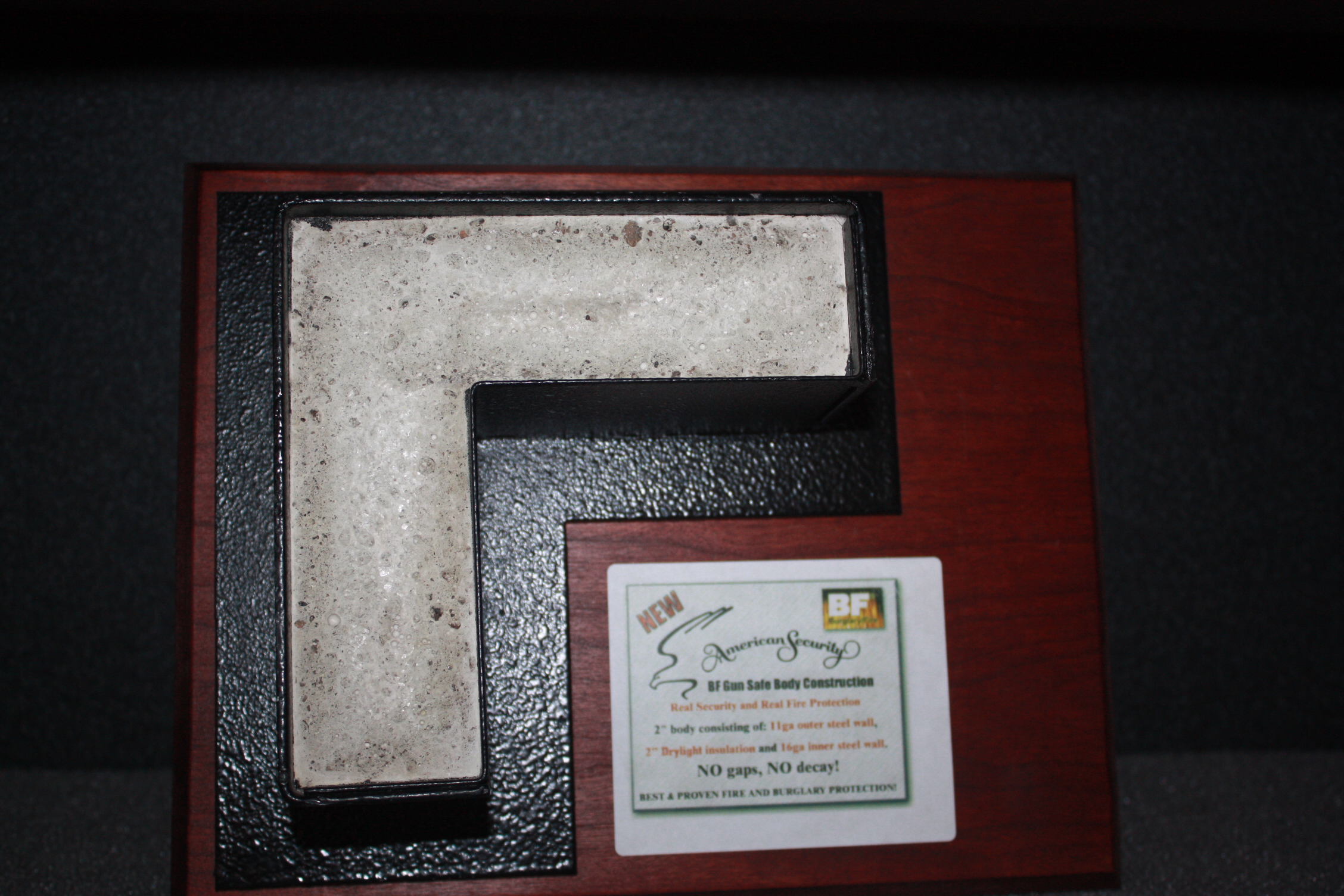
Rather than using dry-wall for insulation (see previous post), Graffunder safes and Amsec BF safes use poured-in concrete based composite materials.  This requires an inner layer of steel so the gun safe body ends up being stronger and more difficult to cut into.  The inner steel also prevents insulation from caving in like Type X drywall.  Making safes with poured-in composite material is a slower and more costly manufacturing process, resulting in a superior product.

Liberty Insulation 006
Amsec BF: Inner and outer steel, poured-in composite insulation

A less common form of fire protection is the use of a thermal blanket made from fiberglass or ceramic fiber. This is supposed to reflect heat away before it gets to the inside of the safe.  I have no idea how well it works, but it does not provide any actual cooling effect like the moisture release from dry-wall or composite materials.  Whatever heat does get inside, however, — mostly through the gap between the door and frame – will certainly be trapped inside.  That will lengthen the time it takes for the safe to cool down after a fire.

Got a “Smelly Safe”? What to do:

People sometimes complain that their home fire safe stinks and it makes the contents smell bad, too.  This is caused by leaving the safe closed for long periods of time, especially when it is moist inside.

1)  All safes should be opened every two weeks or so to let the old air out.  This is especially true with new units because the poured-in insulation may not yet be completely dried.  Just leaving the door open for several weeks might get the smell out.

2)  Clean the inside of the safe with detergent or bleach.  Then enclose one or two laundry dryer sheets inside.  We use Bounce/Febreze and it normally fixes the problem.

3)  If the smell persists there is probably mildew growing in the insulation.  We have had success by putting a bowl of bleach in the safe and closing the door for a week.  It seems like fumes from the bleach kill the mildew.

4)  Still got a problem?  Buy a new safe and open it regularly.