Small Antique Safes for Sale

I have been collecting small antique safes for a long time, but I have been informed that it is time to thin out the collection.  Most of these safes are from about 13” to 18” tall.  They are too small to be very functional, but cute as decorations or conversation pieces.

small-antiques-6-29-003small-antiques-6-29-008

Some folks claim these are salesman’s samples but most were actually sold to be used for storage of cash and jewelry in a home or office.  They typically weigh from about 70 to 100 pounds – a thief could walk away with one, but at least he couldn’t run with it.  Several have handles on top so maybe a poor salesman did have to lug them around on a regular basis.  They were built to be fire proof.  Some units have real wheels underneath, some have fake wheels, some have little feet and some sit flat on the ground.  There are both key and combination lock models.

small-antiques-6-29-007small-antiques-6-29-006

Finding small antique safes for sale with good original paint is difficult so they don’t sell cheap.  If the paint is too plain or worn out to be attractive, they can be restored or customized to suit your taste.

A small antique safe could be your adult version of a piggy bank, or a visible reminder of that special savings goal.  A financial planner I know has a very classy little unit in his office, I think because it sends a message to his customers.  A small antique safe might make a great Christmas gift.  The units shown start at $700.  Call if any of these grab your attention, 616-458-6365.  Antique safes can be delivered, picked up at our shop or shipped across the country.
Used Safe Deposit Boxes Can Be Useful

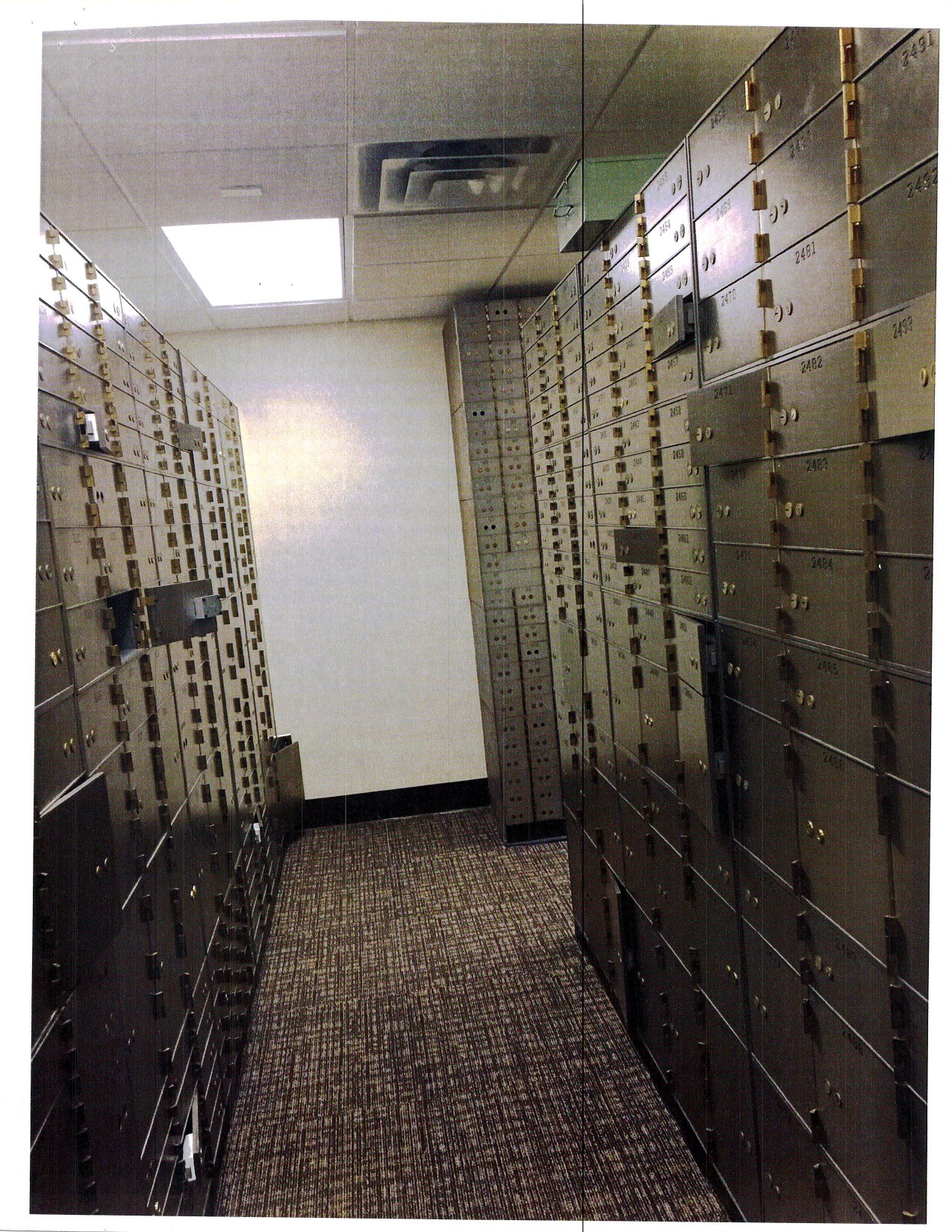
We sometimes get blocks of safe deposit boxes from inside large safes.  But a large local bank is getting ready for a renovation project which includes removing over 2600 safe deposit boxes of various sizes from a large vault.

scan30001scan3

Safe deposit boxes typically have ½” thick stainless steel doors, while the bodies are light duty steel or aluminum.  They usually have dual key locks, a “guard key” for the bank employee, and a “user key” for the box renter.  Some come with combination locks, these are usually for bank personnel.

img_2447

Safe deposit boxes are not hot sellers but a few folks find uses for them.  Coin collectors, for instance, may segregate different classes of coins in separate boxes.  Ammo can be organized with safe deposit boxes inside a gun safe.  If you have a use for safe deposit boxes your local safe specialist probably has some around.  If you need 2600 of them call us right away before this group gets scrapped.

Securing Historic Documents, Signatures, Stamps, Part 2

The last post was about why most fire safes are not appropriate for securing collections of historic documents, signatures, stamps, etc.  Media/data safes are the best way to store these items.

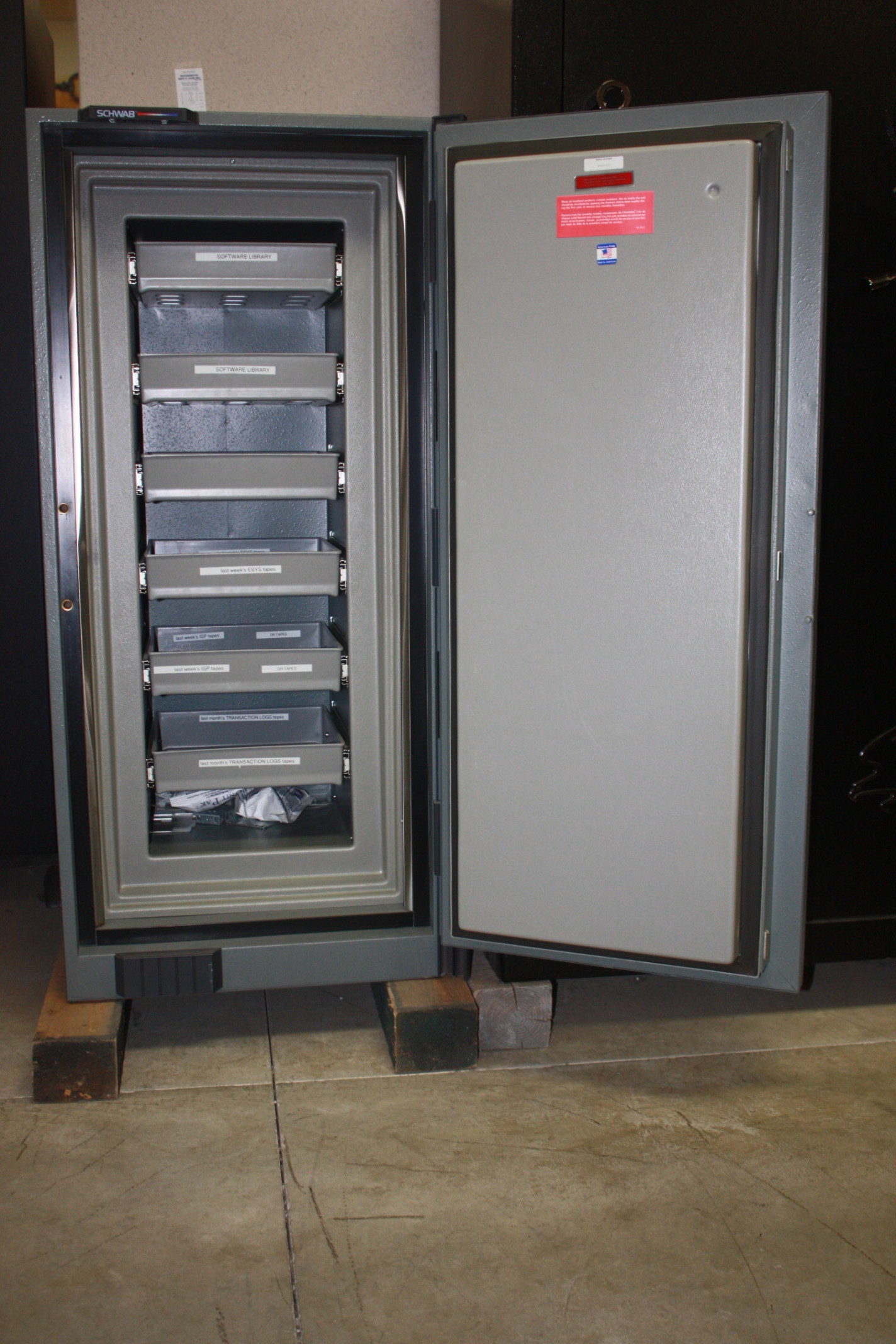
Media safes are built to protect computer discs, tapes, thumb drives, etc., which get damaged at much lower temperatures than paper.  175 to 200 degrees F – or high humidity — is all it takes to ruin discs and tapes.  Data safe insulation does not give off moisture like traditional fire safes, and it will keep the inside temps lower.  During the same test in which the inside of fire safes must stay below 350 F, the inside of data safes must remain below 125 F or 150 F, (lower than the melting point of plastics).  While the inside of most fire safes will become saturated with moisture in a fire, data safes are built to stay under 80% humidity.  Doors on media safes are also more air tight, and many units even have two air tight doors.

img_2421   img_2425

There are trade-offs with media safes, however.  Thicker walls and doors mean that for safes with comparable exterior dimensions, data safes will be smaller inside.  They are not as burglary resistant as some other safes, either; it makes sense to keep the safe holding your collection in a locked room.  Cost of a new data safe is about three times that of other types.  But since few businesses now use data safes, used ones are selling cheap.

For example, the used Schwab 1844CTS pictured is rated 1Hour/125 F.  During the one hour test up to 1700 F, the inside will stay under 125 F at less than 80% humidity.  It is 50.5”h x 22.75w x 13d outside, 38.5 x 12.8 x 13 inside.  Original list price was over $8000, but we’ll sell it in like-new condition for $1000.

Don’t let your bit of history be ruined in a fire.  Protect your collection in a data safe.

Securing Historic Documents, Signatures & Stamps

Collectors of signatures, historic documents or stamps should secure their collections in good safes with two-hour fire ratings, right?  Maybe not.

Fire safes protect papers from charring and burning if there is a fire.  If you experience a fire, however, your documents are likely to be damaged by moisture in most types of safes.  When subjected to heat the insulation gives off water vapor to the point where the inside air is saturated with water.  As the safe cools down, lower internal temperatures cause the air to become super-saturated, so that papers will become damp or even wet.  They will get wrinkly and inks may get blurry.  In addition, water pressure from a fire hose may penetrate the crack between the safe door and frame, forcing water into the safe.  If the safe is in a basement and water pools up there, that water may also seep inside the safe.

People in the safe and gun safe industries usually recommend that valuable documents be protected by putting them in plastic sleeves or Tupperware-type containers to protect them from moisture damage.  This advice may be erroneous.  There are hundreds of different plastic compositions and each has its own characteristics. Good information is hard to find, but the melt point will vary depending on the exact chemical composition.

Consider Tupperware:  Most of their products are made from low density polyethylene (LDPE), high density polyethylene (HDPE) or high density polypropylene (HDPP).  From what I can find these materials begin to melt at temps as low as 278 degrees F for HDPE, or 266 F for HDPE.  Characteristics of the melting process also vary by chemical composition – they may just lose their shape, they might become sticky or they might give off damaging chemicals.  That process might damage the items you are trying to protect.  When fire safes are tested the inside temperature can go as high as 350 F before they are considered to have failed.  Plastic containers, therefore, could potentially melt inside a safe that is “performing well”.

Next:  A better type of safe for historic docs.

Plastic Fire Safes

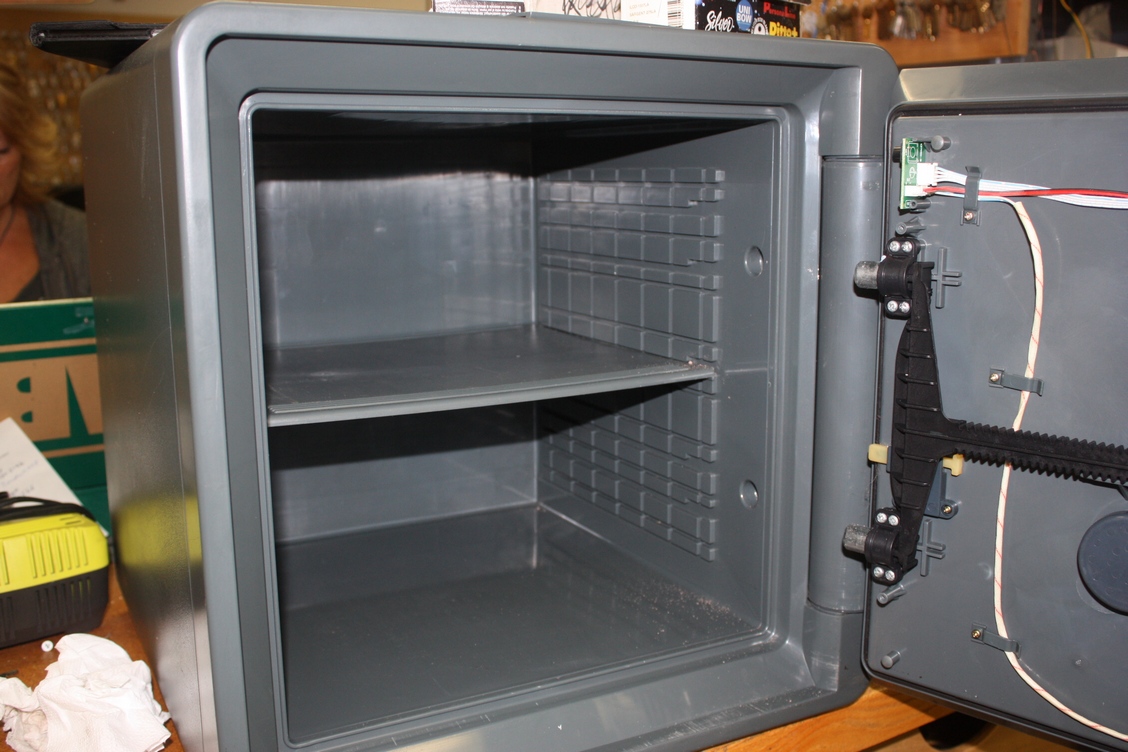
The photo shows a very low-end fire box or fire safe which is sold at big box stores.  We get these in at our shop because they frequently need some kind of work.  The cost of our labor often approaches the cost of a new unit.

IMG_2390_2IMG_2389_2

These fire boxes have an Underwriters Labs “1 hour 350” rating so they apparently do well in a fire.  The problem with these, however, is that people buy them for burglary protection because the packaging calls them a “safe”.  You need to look pretty hard to find any steel here – both the exterior and interior are plastic, as are the working parts.  Even the metal bolts are held in place by plastic.  Poor excuse for a lock, too.  If a burglar breaks into your home and finds one of these units he will go into a “happy dance” before he pops it open.

You need to use some common sense when buying a safe – if you are going to put valuables in it, spend enough money to buy real burglary protection.