How To Fix Cheap Shelves in a Gun Safe

Cheap gun safes, especially Chinese made safes that are sold in big box stores, almost always have weak shelves.  The shelves are made of inferior particle board which is thinner than it should be, so the selves hold very little weight before they sag or break.  I have seen brand new Chinese made safes that sag just from their own weight.  Naturally, the wider the safe is this worse the problem becomes.

SHELF SUPPORTS 002 SHELF SUPPORTS 006

In my opinion it should not be necessary to fix a problem like that with a new safe, or avoid using the shelf for fear of it breaking, but there is an easy fix.  The clips that the shelves rest on are usually 1/2” or 5/8” wide.  At your local home improvement store buy some metal u-channel or square tubing that is big enough to go over the clips.  Cut the material to the correct length and slip it over the clips on both sides of the safe.  Your shelves will then lay flat and hold much more weight than before.

Fort Knox being a quality oriented company uses better, thicker shelving material.  And on 51” or 61” wide safes they install tubing for support at the factory.  As I always tell people, don’t save a few dollars by buying Chines made junk – buy an American made gun safe from one of the few trustworthy manufacturers.

New Home Design, Plan for the Safe

One feature which is frequently overlooked in the design of a new home is where to put a safe or vault room.  Too often the homeowner calls us after the house is built, and then it is more difficult to find a good place for the right safe.  In the home pictured, a cubby hole was built so that the owner’s gun safe fits right where he wanted it, and it does not stick out into the room.

Blog, Safe Planning (2)

Most owners of medium to high-end homes have need of a safe.  Everyone has important documents that should be kept private and protected from fire – wills, trust papers, investments, mortgage papers, etc.  Many homeowners also keep substantial amounts of cash, jewelry, metals, coins, stamps, sports memorabilia, and so on.

Each application has different requirements.  For example, if a woman regularly wears expensive jewelry she should have a jewelry safe located where she dresses, so she can access it easily.  If the safe is in the basement she will still leave her jewelry sitting out.  Cleaning people may then be tempted, or someone who breaks into the home for a quick “grab and run” may find it.  If her safe is small it should not sit on the floor.  Getting down on hands and knees to look for a ring or necklace is inconvenient.  And remember that as she gets older her knees and back will give her more trouble.  A small safe mounted securely at about eye level works out much better, and tall skinny unit works even better.  Proper planning when the home is designed makes these options possible. Likewise, putting a vault door or a really heavy safe in a home is much easier if planning is done in advance.

If you are the builder or architect, make sure to ask the homeowner about safes early in the process.  If you are the homeowner, don’t be tempted to put this issue off until later.

The Best Batteries for Electronic Safe Locks

We get this phone call every day:  “My safe has an electronic lock and I have changed the batteries but it still won’t open.”  Usually the problem is that they put in cheap batteries.  Yes, there is a difference.

J BAWM & VULCAN 007

Whether the lock is on a fire safe, commercial safe, gun safe or vault door, the ONLY batteries that will consistently work electronic safe locks are Duracell and Energizer alkaline.  Store brand batteries and even the other famous brands are inferior.  The voltage will be the same on most of them, but the amps will be higher on Duracell and Energizer. Electronic safe locks need high amps to work properly. Use batteries that are fresh from the store, not the ones that have been sitting in that kitchen drawer for six years.  Don’t use rechargeable batteries, either.

One more word of advice:  Be really careful when changing batteries on electronic safe locks so you don’t break the contacts or connecting wires.  That will require the help (and the fee) of a safe technician.

Insulation in Chinese Made Gun Safes

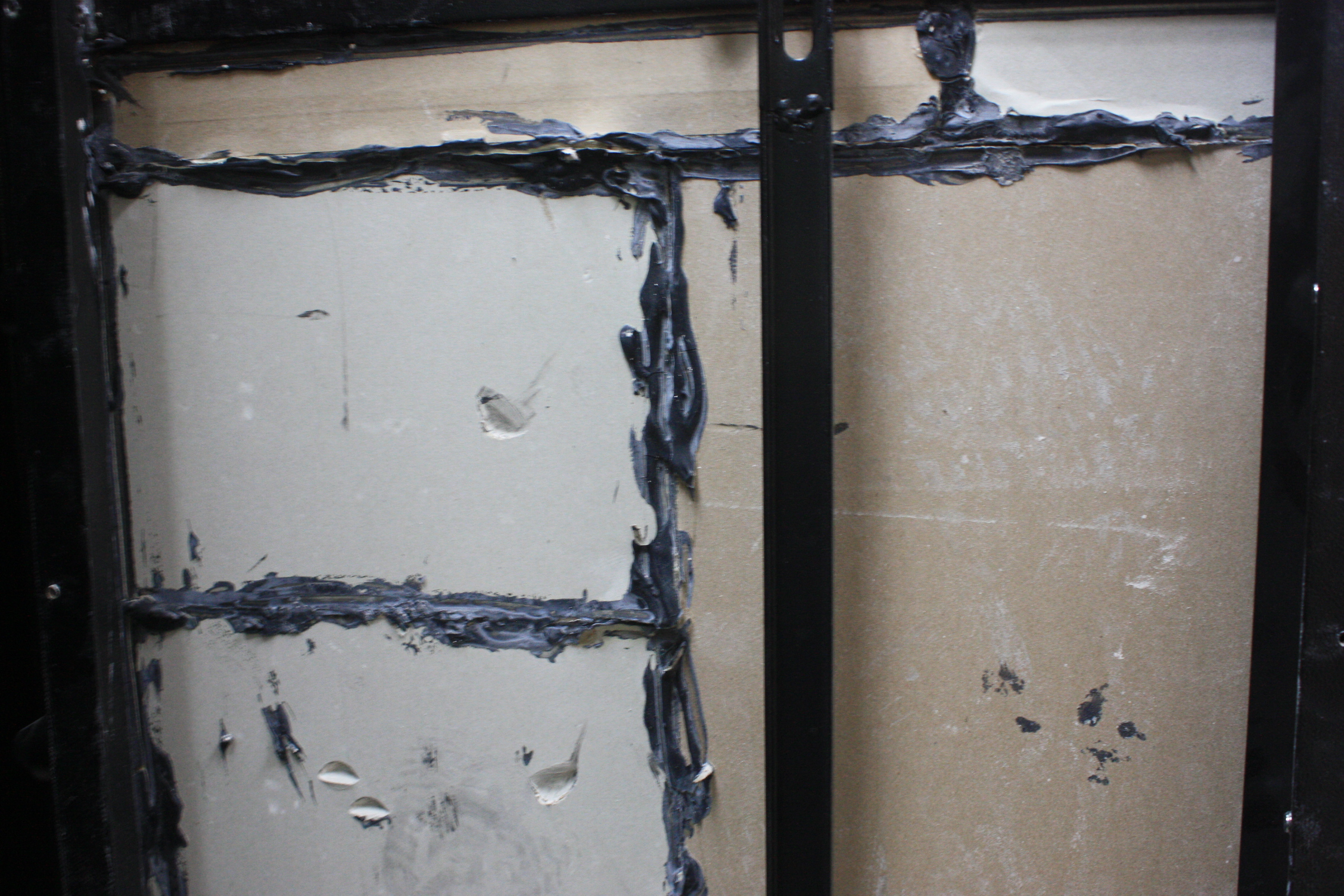
Part of what you typically get with cheap gun safes / Chinese made gun safes is insulation made up from construction scraps.  The pictures below show a new Chinese made safe in our shop for service.  Notice that the drywall is pieced together from different kinds of drywall.  The light and dark pieces are even different thicknesses.  They are glued into place and the seams are mostly covered with tar-like glue.  Some of the gaps are quite wide, which naturally allows heat to pass in a fire.

Dry Wall in Chinese safes 002 Dry Wall in Chinese safes 005

In the light colored pieces at the lower left, you can see hammer marks from when these pieces were broken out from whatever they were previously nailed to.  Look close and you can see boot prints.  In a number of places the paper backing is loose – it pulls away from the gypsum when the pieces are broken apart carelessly.  Frequently with this type of junk safe, the drywall pieces will be smaller than what is in this safe, as small as 5” X 5”.

Remember a few years ago that many homes, especially in the southeast U.S., were left uninhabitable by Chinese drywall with very high levels of formaldehyde?  Well, that same drywall was (still is ?) used in Chinese gun safes.  I have read that those formaldehyde emissions promote rust (guns), as well as lung cancer, heart disease, etc.  Do you suppose they still use that crap in gun safes?  What do you think happened with all that high-formaldehyde drywall?  Where in the world could you possibly re-use that stuff?  Think about it.

Do yourself a favor:  Buy an American made gun safe.

Gun Safes at SHOT Show, Part 2

The previous post talked about cheap lock systems on Chinese made gun safes being shown at the 2015 SHOT Show.  Another disturbing thing I saw there was flagrant lying and intentional misrepresentation about steel thickness on these safes.

At past shows I was suspicious about claims of steel thickness.  So this year I carried a micrometer.  With the door open you can measure the edge of the safe’s frame to get an accurate reading.  In the picture below the micrometer is measuring steel on an American Security FV model gun safe, which is imported.  It shows .105”, exactly correct for the 12 gauge steel Amsec advertises.  Amsec is a reputable company and does not exaggerate.

measuring steel 003

Four of the vendors I visited at SHOT over-stated how much steel their Chinese built safes have.  The worst offender was the company I wrote about last summer.  One safe which they claimed has 10 gauge steel actually had less than 11 gauge.  After I talked with them last year about their bogus claims, and proved that they were not telling the truth, they still lie about what they are selling.  No one holds them to account.  Stores buy these units without verifying critical specs, then pass them on to consumers who get less security than they think.

This same company was showing a new safe which they advertised as “Made in USA With American and Global Parts”.  When challenged on this statement they admitted the safe was made in China, but said “It uses enough American parts that we can legally say it is made in the US”.  Wow, that is interesting!  And shameful.

I cannot mention the names of these companies for fear of being sued.  But if you plan on buying an inexpensive safe from a box store, don’t believe everything you read, and I recommend that you take a micrometer when you shop.   Please — pay attention to what you buy and buy a REAL gun safe.