Buying a Gun Safe: Where’s the Beef?

“Where’s the Beef?”  That famous line sold lots of hamburgers for Wendy’s because it pointed out that their competitors’ burgers had very little meat.  In the same way, when it comes to gun safes sold by big box stores, you could ask “Where’s the Steel?”  Gun safes found in box stores usually have very thin steel in the doors and bodies, in spite of the manufacturers’ claims of security.  The doors appear to be strong because they are up to 1 ½” thick, but that is usually just thin steel wrapped around drywall.  One manufacturer brags that they have “thick 12 gauge” steel.  Really?  12 gauge steel is barely one-tenth of an inch thick!  And that is supposed to protect your guns worth thousands of dollars?  Steel that thin is easily cut by power tools, or pried open with basic tools.

Try this test with a gun safe in a box store:  With the door open, put your knee into the front of the door and then pull hard toward you at the top. You can probably feel the door flex a little.  Imagine how easily it would bend if someone used a pry bar!
DOOR EDGE STEEL 003DOOR EDGE STEEL 005DOOR EDGE STEEL 008

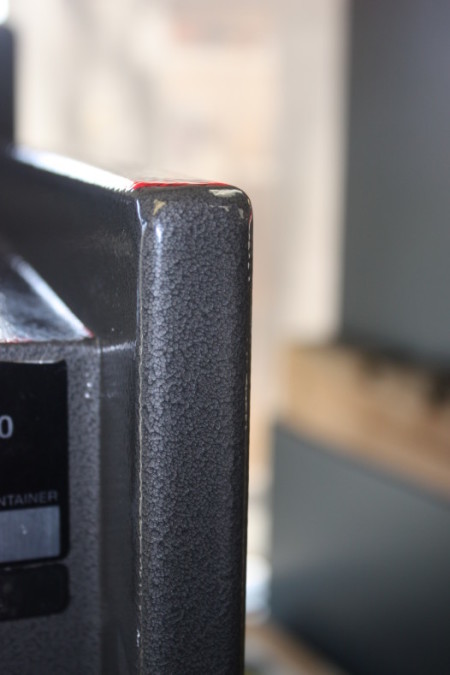
The picture on the left is Brand X.  The door looks good because the edge is 15/16”, but the steel is only a roll formed 12 gauge, just .1046 of an inch.  The center picture is Amsec’s BF gun safe.  The edge is only ½” thick, but that is a solid steel plate – 4.7 times thicker steel.  On the right is a Graffunder Castle series door edge:  1” solid steel plate, 9.5 times thicker than Brand X!  If you want to protect your valuables don’t settle for 12 gauge steel.  Gun safes with steel plate all the way up to 1 ½” is available.  You won’t see them at a box store, however; you will need to go to a safe dealer.  Will they cost more?  Of course they will.  But it does not make sense to keep your gun collection (or silver, gold, cash, jewelry, etc.) behind a flimsy safe door that can easily be pried open or cut.

One other thing . . .  Safe manufacturers that do put lots of steel in their doors will tell you that!  They want you to know it.  If a brochure (or salesperson) won’t tell you specifically how much steel is in the door it will be 12 gauge or less.  Visit a knowledgeable, honest safe dealer – not a box store – to be sure you are buying real security.

Relock Devices: Other Types

There are a number of less common types of re-locker devices.  For example, high-security safes sometimes come with ”glass relockers”.  There is typically a piece of tempered glass with two holes in it, and wires under spring tension are hooked into the holes.  If a person pounds on the lock it will shatter the glass, causing the relock pin to snap into place, which blocks the safe boltworks from being forced open.  Hitting the glass with a drill bit will also break the glass.

Thermal relockers are found only on high end, high-security safes.  Normally there is a piece of metal or a soldered piece in a wire arrangement, all under spring pressure.  The metal melts at a very low temperature, maybe 250 degrees.  Heat generated from a torch, or even from extensive grinding, will melt the metal which sets off the relocker.

Relockers, Graffunder 003

Some relockers do not actually block the boltworks from moving.  On some units firing a relocker causes a heavy bolt to shoot out from the door, behind the frame of the safe.  This is great way of keeping the door from being forced open.  The photo shows a unique system:  The relock can be fired either by an attack on the lock, by a torch cutting through the cable, or by melting the soldered thermal joint just above the lock encasement.  When set off this is actually a double relocker.  One part (not shown) blocks the right side boltworks from moving.   The vertical bolt shoots out about an inch — this is accomplished with a heavy spring which can’t be seen here.  It is then behind the door opening of the safe body where it very stubbornly keeps the safe door closed.

Once again, only experienced safe technicians should work on your safe.  Inexperienced technicians may accidentally set off a relocker, perhaps costing you hundreds of dollars.

Relock Devices: External Relockers

External relockers are located outside the lock body, but usually right next to it, inside the safe door. The external relocker stops the transfer bars from moving, so that the safe bolts cannot be forced back by a burglar into the unlocked position. Two variations of the most common arrangement are shown below.

External Relockers 002External Relockers 005


If someone pounds on the dial enough so that the dial spindle drives the lock or lock cover backward, then it releases the spring-loaded relock bolt.  On some safes (picture on right) it will block the cam from moving by dropping behind the cam or into a notch on the cam.  Safes that use gear drives rather than cams will be different.  On the gear drive Fort Knox on the left , the relock bolt goes behind a block welded to the transfer bar.  Some safes have a notch in the transfer bar into which the relocker goes.  A qualified safe technician will be required to open a safe after an external relocker has been set off.

Interesting note:  The safe on the right is a popular brand that we will not sell, and the relocker is not assembled properly.  The lock cover plate is installed so that the roll pin rests on top of it, rather than being fit into a hole in the plate where it is supposed to be.  I guess it takes too long to make the parts fit correctly.

When buying a safe make sure it has an internal relocker.  Most cheap safes, especially Chinese made safes, do not have them.

Relock Devices on Safes: Internal Relockers

Most safe manufacturers tell you that they have relock devices in their safes, but they never tell you what one is or what it does.

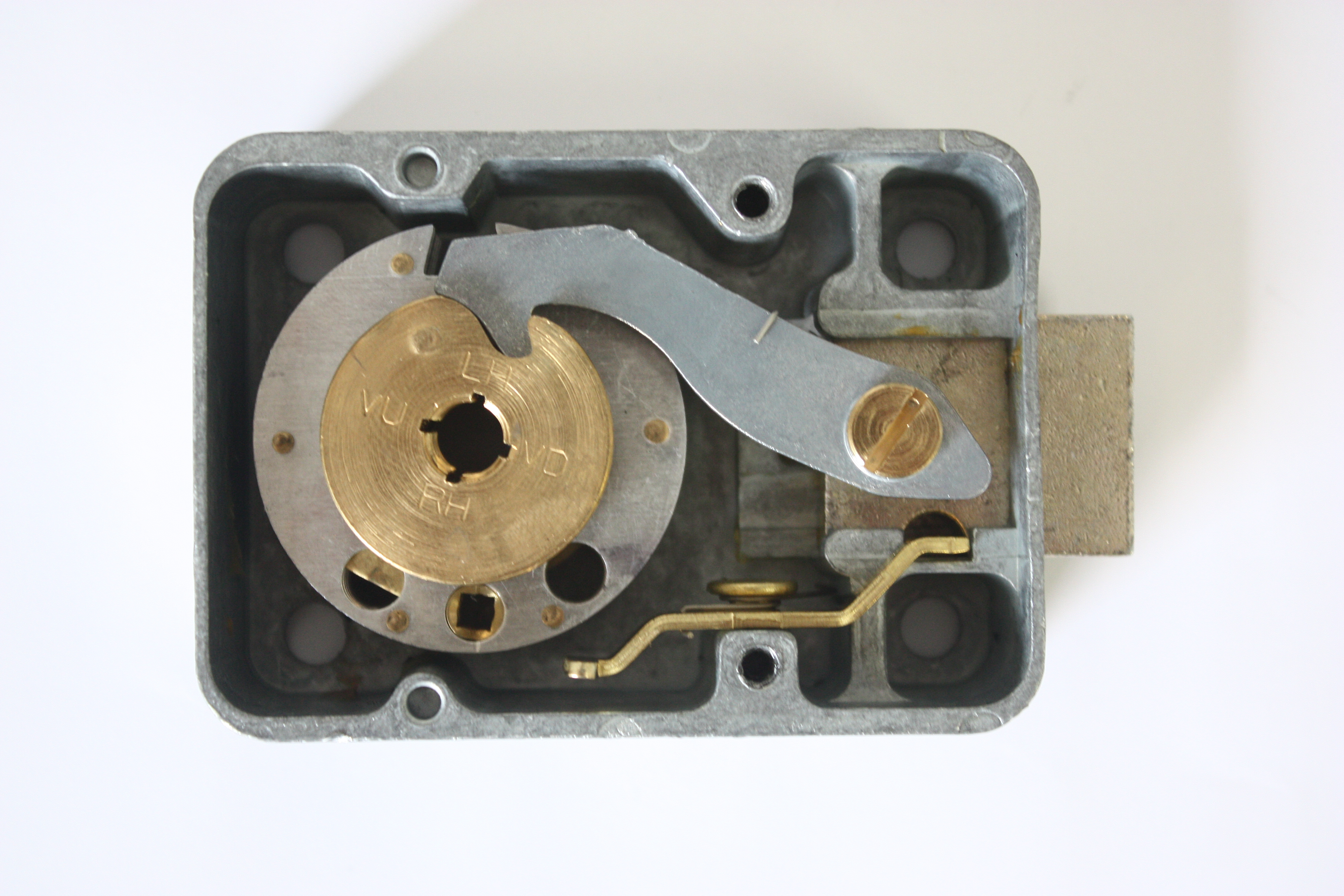
The most common form of relocker is the “internal” relocker.  “Internal” because it is located inside the lock body on safe locks that are rated Group 2 or higher.  Burglars attempting to break into a safe will frequently smash the lock dial on the outside of the safe with a hammer, bat or anything else they can swing.  The force of that blow will drive the dial spindle back into the safe, against the back cover of the lock body. The lock body is located inside the safe door.  Enough force will cause the back cover to break away along a line that is intentionally made weak by the lock manufacturer.   When this occurs a spring loaded “relock trigger” pops into a hole in the lock bolt.  The lock bolt is the part that actually keeps your safe locked, by preventing the big bolts in the door edge from being pushed back in.  With the relock trigger in that hole, then the lock bolt is deadlocked and cannot be forced to unlock.

RELOCKERS 003RELOCKERS 009

Picture on left shows back cover of S&G Group 2 lock.  Picture on right shows lock with cover removed.  Relocker is the angled brass piece in lower right.  Since the lock cover is removed the relocker is “fired”, and you can see the right end of it is in the hole on the lock bolt.

If the relocker is set off this way a burglar is much less likely to get into your safe.  You will not be able to open it either.  An experienced safe technician will be able to open your safe and make it useable again.  Note that most locksmiths are not skilled at opening locked safes, especially when a relocker has been set off.

Next posting will be on external relockers.

Beware of Dishonest Gun Safe Sellers

A representative from a safe importer called last week wanting to set up an appointment to show off a variety of safes that are mounted in a “traveling showroom”.  He is signing up dealers to sell their Chinese and Korean built products.  I stated very directly that in the last four contacts with his company, at SHOT Shows and in phone calls, their company’s reps misrepresented or flagrantly lied about the products they were selling.  He stated that if that had happened, it certainly had been some kind of simple misunderstanding.  Anyway, he said, it can’t hurt to just look at their safes and judge the quality.

So yesterday the rep visited our shop with the cube truck sporting an assortment of their products.  He was excitedly explaining that their Chinese built gun safes were far superior to everyone else’s Chinese built gun safes because “These lines of gun safes have bodies made of 10 gauge and 8 gauge steel” rather than 12 and 14 gauge steel like the others.  On opening the door to the first safe and feeling the steel I immediately told him that the steel was not 10 gauge, that they had again lied, or at least stupidly misrepresented their product.  He was offended and called the home office for reassurance.  But I measured the steel with a micrometer and proved to the rep that his gun safes were, in fact, 12 gauge steel, just like everyone else’s cheap Chinese gun safes.  He went on to make a number of other false statements before leaving.

The problem is that this company is going around signing up dealers who apparently do not question what they are told.  These dealers then sell inferior products to consumers who are told that they are paying for better protection.  When you plan to buy a quality gun safe, ask the seller enough questions that you can be certain he is knowledgeable and honest.  And do not trust any safe which was built in China.