Using a Crane to Move a Heavy Gun Safe

In 2012 a man bought a 3025# Graffunder gun safe from us, but the delivery was especially tricky.  The only way to get the vault into the basement was to go over the house, then go in through a lower level door.  Lifting something that heavy, that high, then extending the boom far enough, requires a special crane and a talented crane operator.  Even the condition of the ground where the crane sits has to be right.   Everything went smoothly.

CRANE LIFT 041 (427x640)CRANE LIFT 040 (640x427)

Well, last month our customer moved to a new home, so we needed to reverse the process.  After making the vault “fly” again and taking it to the new location, it actually needed to go up some stairs too.  We had to build a special structure to accomplish this part of the move.  Obviously, this is not work for amateurs.  It takes special equipment and lots of experience.  It is not inexpensive, either.  But if you really need a high security gun safe, like a Graffunder or a Fort Knox Safe, delivery cost is just part of the investment.  Buy your gun safe from a company that is highly skilled at delivering safes.
Beware of Gun Safes Which Are Mis-represented

One of the fastest growing companies in the gun safe industry does not make anything, they import their gun safes from China.  This blog has referred to them in the past because they are most flagrant liars, the most deceitful people I know.  (Fear of getting sued prevents using their name.)  They came around again last week with a cube truck in which they display a number of products.  Giving them another chance, I climbed into the truck and listened to the national sales manager for a minute about how great their Chinese gun safes are.

Their top-of-line gun safe is supposed to be built of 8 gauge steel, which would be pretty good, but feeling the steel was enough to tell that this was another lie.  With a micrometer and gauge chart it took about 30 seconds to show he was wrong.  The steel was 10 gauge – a big difference.  Even after proving the lie he made up stupid stories to weasel out of the problem:  “Well the supplier’s paperwork says 8 gauge”; “it depends on which gauge system you are using”, “maybe this is one of the old models”, etc.

This guy stated that their gun safes are better than other imports because the factory they use is the best one in China.  But this factory is one which I know uses skip-welds. It also uses drywall construction scraps for insulation.  This company claims that one of their product lines is “Made in America” even though they are, in fact, made in China.  Apparently, if you install the lock and a few little pieces in the U.S. you can claim the whole safe is American.  I could go on….

The point is that these crooks claim to be protecting your valuables while intentionally misleading you.  Dishonestly selling JUNK at low prices is why they are growing.  If you buy a safe to protect the guns which are your passion, or to protect a significant part or your net worth, you darn well better buy your gun safe from someone who knows and cares and is honest about what they sell!

Most Gun Safes Do Not Seal Properly in Fires

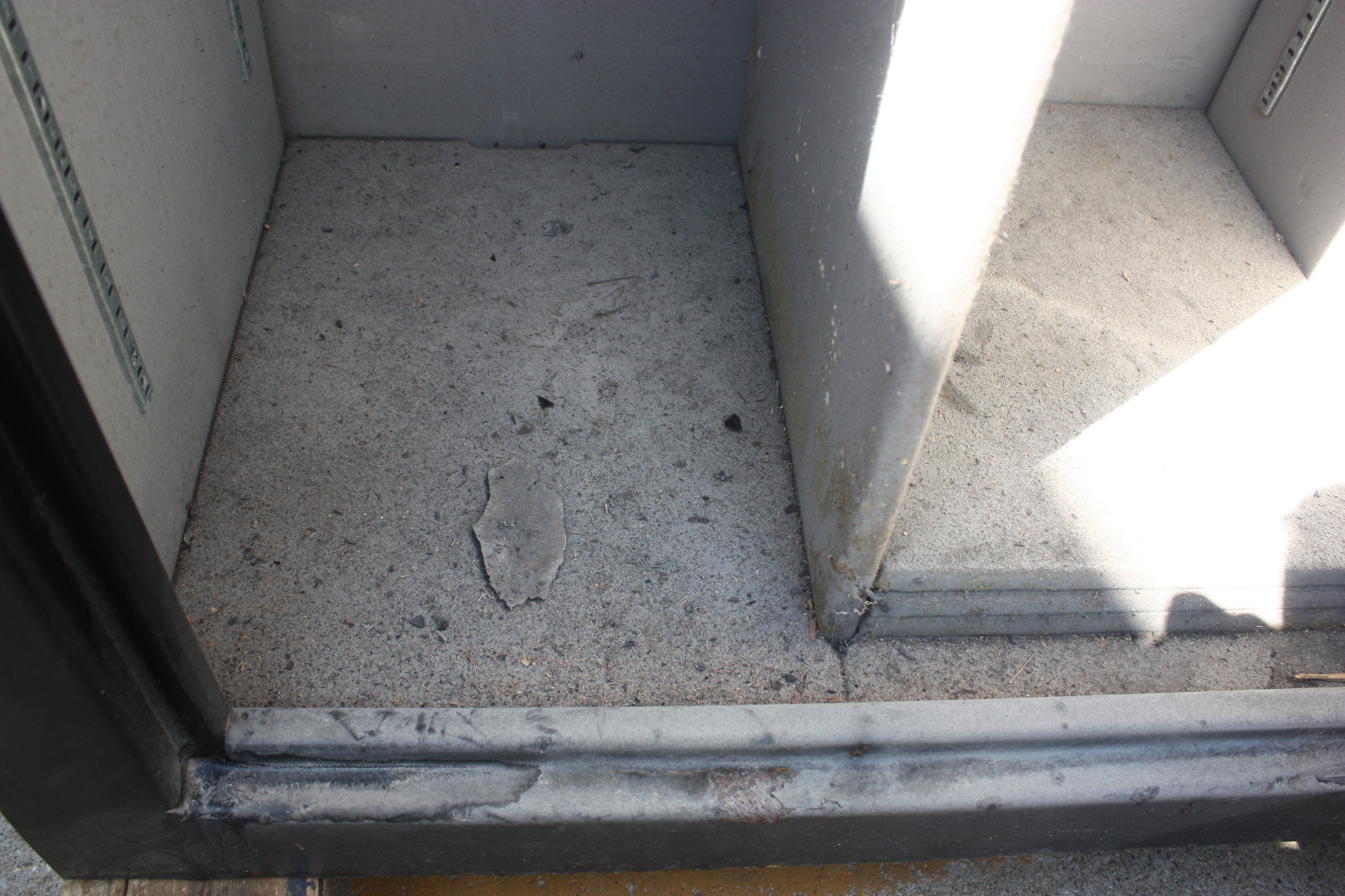
Earlier posts talked of the problem with gun safes having only one seal.  We have two safes in our shop from different manufacturers that went through fires, and they demonstrate the point perfectly.

IMG_2609     IMG_2597

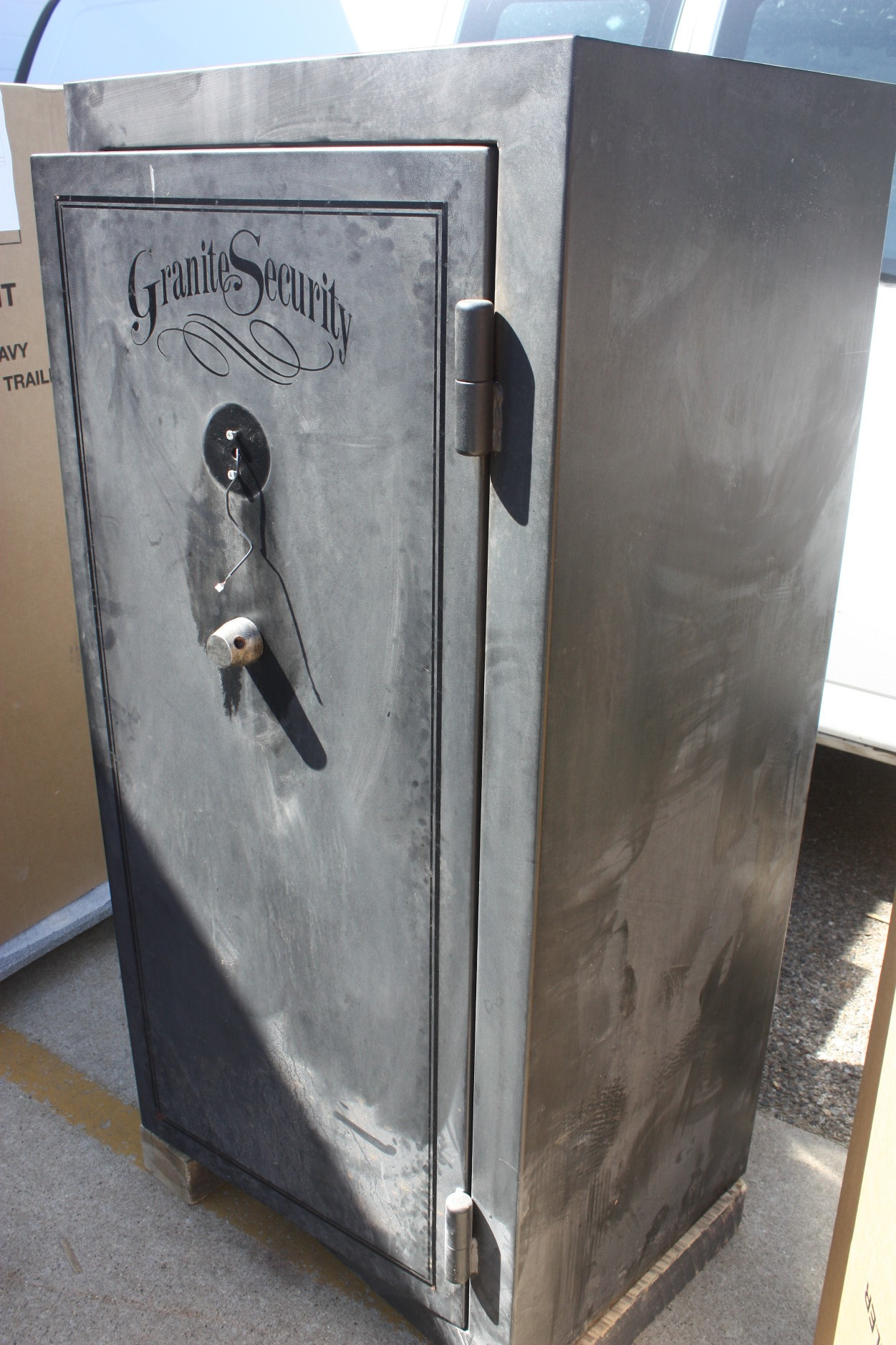
Gun safe manufacturers all talk about having the intumescent seal which is supposed to protect your valuables in a fire.  The theory is that when you have a fire, heat will cause the intumescent seal to swell up and seal the door shut.  But in many fires the gun safe does not get hot enough for the seal to work, allowing heat and smoke to enter between the door and frame.  Pictured is a gun safe with a “60 minute fire rating” which uses only the intumescent seal.  While the safe got coated with sooty smoke it did not get very hot, so the seals did not expand.  The paint will clean up fine; everything inside, however, was damaged by heat, acidic smoke, cinders and ash.  You can see that the seals never expanded.  Pictures of the interior show damage from smoke, ash & cinders.  Ironic:   The “Fire Safe” label is coated with soot and smoke that the “fire safe” did not protect against.

IMG_2601    IMG_2614

The plain fact is that for good fire protection gun safes need at least two different seals.  One needs to seal the door ALL THE TIME, whenever the door is closed.  See posts dated 7-6-15 and 7-20-15 for details.  Fort Knox gun safes use an airtight fin-type seal on most of their units and Amsec uses a foam cushion.  In both cases the gap between the door and frame is closed even when the safe is cold.

Seal systems on gun safes and vault doors are not a minor point – they are one of the most critical features.  Yes, you might need to pay a little more for real protection, but there is no point in paying less for a product which does not work!

Putting a Safe or Gun Safe in a Garage, Part 2

If you need to put your safe or gun safe in the garage here are the steps you should take:

  • Invest in a heavier, higher quality vault, preferably TL-rated like American Security’s RF series gun safe.
  • Conceal the safe the best you can. Build a cabinet around it or drape a blanket or something over it.  American Security sells what they call a “Safe Cloak” for gun safes which is a fabric cover that makes your safe look like a cheap storage cabinet.  It attaches to you gun safe with a magnet across the top and hangs down to ground level.  If possible, put the safe in a back room or around a corner.
  • Don’t allow service people or delivery personnel to go through your garage.
  • Keep your garage door locked at all times to keep people out.
  • Increase the perceived risk to a burglar — put up a sign stating that the house and garage are monitored. It helps to install a very conspicuous camera, even if it is fake.
  • Anchor your safe to the concrete floor using high grade anchor bolts.   Most fire safes are light enough to be picked up.  If you don’t have the right tools or skills, hire someone who does.
  • Don’t keep pry tools, sledge hammers, torches, etc. in the same area – keep them locked up in the house.

To avoid problems from cold and fluctuating temperatures in northern states:

  • Use a dehumidifier rod (heat bar) inside the safe to keep temps as stable as possible.
  • There can be a problem in those first warm humid days of spring when the ground is still very cold. The cold floor will keep pulling warmth from the safe causing condensation, making the safe sweat, which encourages rust.  Antique safes are especially prone to rust.  It is best, therefore, to have a small amount of contact with the floor.  Thin squares of wood or plastic at the corners will minimize the problem.  We usually use pieces of the plastic shims used to install windows and doors.  Important Note:  Don’t raise the safe too far off the ground; the bigger the gap there is between the floor and the safe, the easier it is for someone to move the unit.  A big gap makes anchoring less effective too.
  • Battery life in electronic locks will be shorter in cold situations. I would guess that electronic locks themselves would have shorter lives, but that is just speculation.  Dial locks are less affected by cold.

Keeping your gun safe in the garage is less than ideal.  Minimize risk by taking proper precautions.

Gun Safe Destroyed in Fire

It has been a long time since I wrote about the inferior insulation used on most gun safes, and the inferior way it is installed.  The photo below prompted me to comment on the subject again.  The picture shows a gun safe (made by the best-known manufacturer) which went through a fire earlier this year.  As you can see this gun safe failed completely.  The “Type X” drywall is in pieces in the safe, along with the remainders of expensive shotguns.

2017021795

Brief refresher:  Type X drywall shrinks and breaks into pieces when heat from a fire cooks out the moisture.  Glue used to install the drywall gets soft and lets go, so the drywall caves in.  That glue probably burns, too.

Do not buy a gun safe that uses Type X drywall installed with glue!  There aren’t many good choices because almost every gun safe manufacturer uses this type of construction.  Try Fort Knox, Graffunder and American Security’s BF line.