Relock Devices: Other Types

There are a number of less common types of re-locker devices.  For example, high-security safes sometimes come with ”glass relockers”.  There is typically a piece of tempered glass with two holes in it, and wires under spring tension are hooked into the holes.  If a person pounds on the lock it will shatter the glass, causing the relock pin to snap into place, which blocks the safe boltworks from being forced open.  Hitting the glass with a drill bit will also break the glass.

Thermal relockers are found only on high end, high-security safes.  Normally there is a piece of metal or a soldered piece in a wire arrangement, all under spring pressure.  The metal melts at a very low temperature, maybe 250 degrees.  Heat generated from a torch, or even from extensive grinding, will melt the metal which sets off the relocker.

Relockers, Graffunder 003

Some relockers do not actually block the boltworks from moving.  On some units firing a relocker causes a heavy bolt to shoot out from the door, behind the frame of the safe.  This is great way of keeping the door from being forced open.  The photo shows a unique system:  The relock can be fired either by an attack on the lock, by a torch cutting through the cable, or by melting the soldered thermal joint just above the lock encasement.  When set off this is actually a double relocker.  One part (not shown) blocks the right side boltworks from moving.   The vertical bolt shoots out about an inch — this is accomplished with a heavy spring which can’t be seen here.  It is then behind the door opening of the safe body where it very stubbornly keeps the safe door closed.

Once again, only experienced safe technicians should work on your safe.  Inexperienced technicians may accidentally set off a relocker, perhaps costing you hundreds of dollars.

Beware of Dishonest Gun Safe Sellers

A representative from a safe importer called last week wanting to set up an appointment to show off a variety of safes that are mounted in a “traveling showroom”.  He is signing up dealers to sell their Chinese and Korean built products.  I stated very directly that in the last four contacts with his company, at SHOT Shows and in phone calls, their company’s reps misrepresented or flagrantly lied about the products they were selling.  He stated that if that had happened, it certainly had been some kind of simple misunderstanding.  Anyway, he said, it can’t hurt to just look at their safes and judge the quality.

So yesterday the rep visited our shop with the cube truck sporting an assortment of their products.  He was excitedly explaining that their Chinese built gun safes were far superior to everyone else’s Chinese built gun safes because “These lines of gun safes have bodies made of 10 gauge and 8 gauge steel” rather than 12 and 14 gauge steel like the others.  On opening the door to the first safe and feeling the steel I immediately told him that the steel was not 10 gauge, that they had again lied, or at least stupidly misrepresented their product.  He was offended and called the home office for reassurance.  But I measured the steel with a micrometer and proved to the rep that his gun safes were, in fact, 12 gauge steel, just like everyone else’s cheap Chinese gun safes.  He went on to make a number of other false statements before leaving.

The problem is that this company is going around signing up dealers who apparently do not question what they are told.  These dealers then sell inferior products to consumers who are told that they are paying for better protection.  When you plan to buy a quality gun safe, ask the seller enough questions that you can be certain he is knowledgeable and honest.  And do not trust any safe which was built in China.

Vault Doors: Importance of Seals

In my last blog about vault doors, I mentioned the ridiculous fire ratings that some manufacturers claim to have, based solely on how much drywall insulation they use when their doors have never been tested.  Now consider the seals used between the doors and frames.

To see the importance of seals on vault doors read my last few postings about gun safes.  Look at the test data that shows how poorly most of them (all of which use a single heat-expanding seal) perform – how heat and smoke can infiltrate the safe before and after the expanding seal actually expands.  The insulation in gun safes creates a positive steam pressure, because of the small confined interior space, to help push out the really hot air and smoke.  This phenomenon will not occur with a walk-in vault because the interior space is so large.  So an effective cold seal, in addition to an expanding seal, are even more important on a vault door than on a safe.  And yet most vault door manufacturers use a single, expanding type seal.

Expanding seal on door edge, cold seal in door jamb

American Security vault doors are built and sealed the same way as their BF safes, the safes that did so well in the fire test.  It is logical that their vault doors will work the same way.  I suspect that Fort Knox vault doors would perform in a similar way too because they have both cold and heat expanding seals.

When you look to buy a vault door, do not trust any claim the manufacturer makes about a “fire rating”, unless it has been tested and certified by U.L.  The best you can do is to get one in which the door fits tight and there are two kinds of seals.

Gun Safes and Fire: Seals, part 2

Below is a smaller portion of the test curve which was shown in the previous blog.  Note how with the three inferior safes the inside temp shoots almost straight up at the beginning of the test.  Then at about four minutes the curve turns back down slightly before shooting up again.  This momentary reversal happens when the expanding heat seals get hot enough to expand.  It does help, but it is clearly inadequate.

Fire Test Chart

If there is a large gap between the door and the door frame, or the door does not close snugly, then heat and smoke will just pour in. In theory when the insulation gets hot enough to release moisture it provides a degree of cooling. And the resulting water vapor should create a positive pressure to keep really hot air from coming into the safe.  But these affects are not enough to overcome poorly designed doors which do not seal.

Gun Safe Seals 006

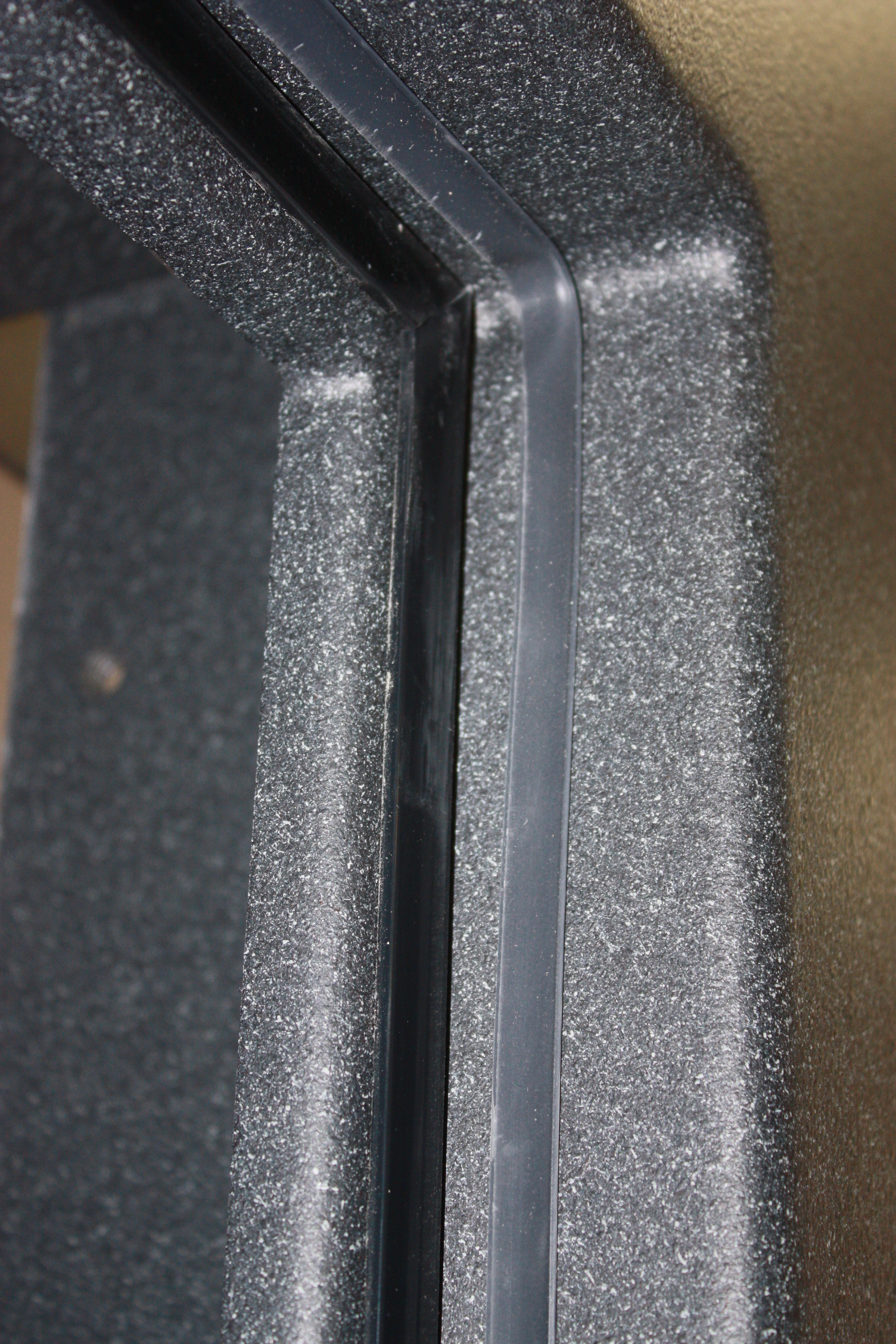
So why did the American Security safe perform so well?  First, these safes have plate steel doors that have tight tolerances so the doors fit properly.  Second, these units have two types of seals.  They have an expanding seal like other safes (top edge of door in photo above). But they also have a cold seal (in door frame) that keep out heat and smoke even before the expanding seal gets hot enough to work.  Makes perfect sense, doesn’t it?  None of the test safes were by Fort Knox, but most Fort Knox gun safes also use double seals.  The inner seal (see photo below) expands, while the outer seal is a fin-type which is very air tight all the time.  Graffunder gun safes use double seals, too — see earlier post.

Gun Safe Seals 001

Why don’t other safe manufacturers use double seals?  Some choose to sacrifice real protection in favor of lower costs.  When buying a gun safe, make sure the door fits properly and make sure it has both hot and cold seals

Vault Doors for Secure Rooms

Recently we have been selling vault doors across the country, more than ever before.  This is a reflection of increasing home construction, and also an increase in the number of homeowners who want the security of an in-house vault room.

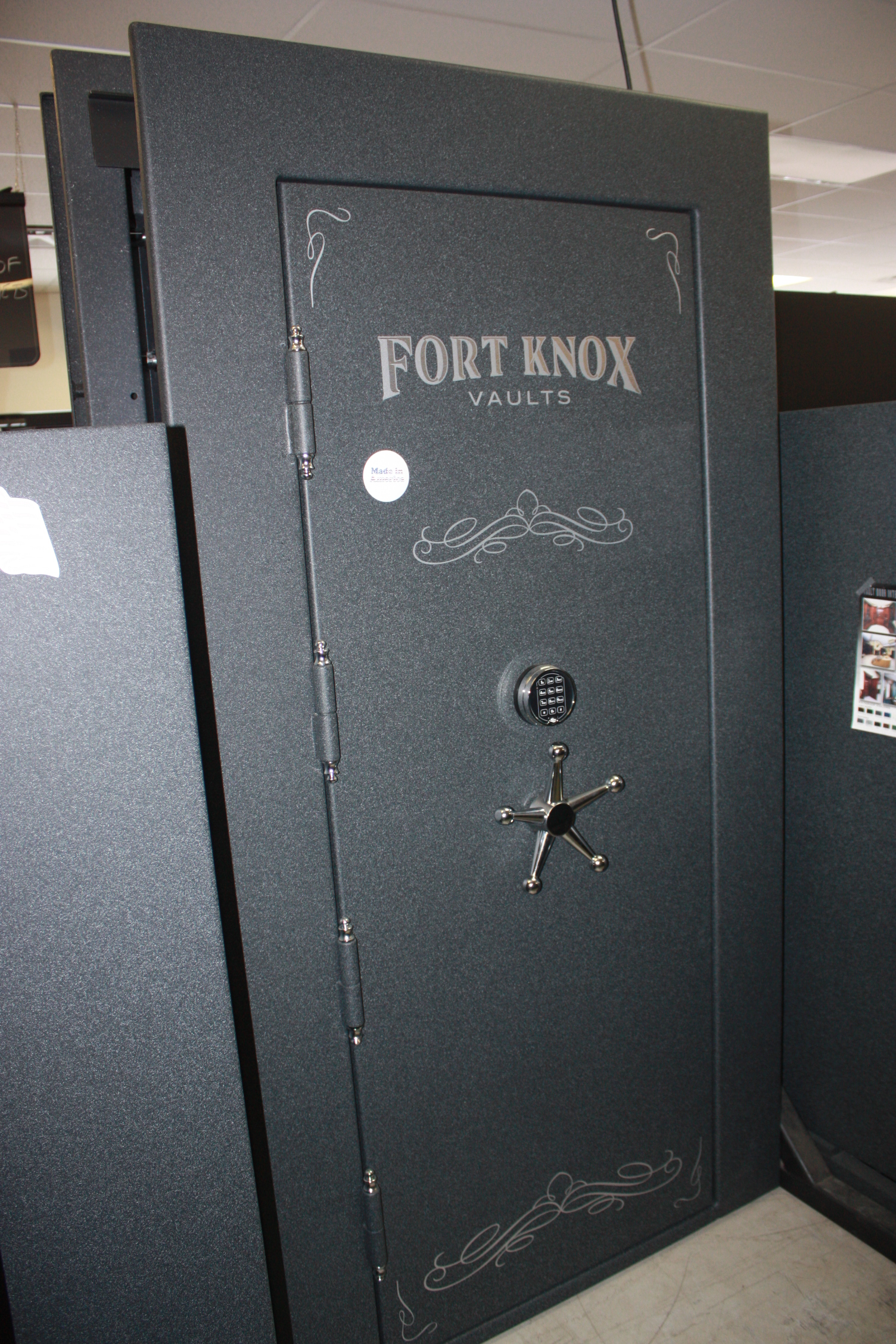
VAULT DOORS 002VAULT DOORS 004


If you dream of having your own vault room, be really careful of what door you buy!  There are a number of companies producing low cost, poor quality products which might disappoint you.  Ask lots of questions and get good, knowledgeable answers.

  • How much steel are you really getting?  (Not how thick the edge of the door is.)
  •  Is the inside emergency release easy to use?  Would your children be able to work it?
  • How many seals does the door have?  (A single heat-expanding seal will allow lots of smoke to enter before the seal expands.)
  • Does the door come with a commercial grade lock or a low-cost model?  (Even well-known lock manufacturers make locks that we won’t use.)
  • Can you lock yourself inside quickly if you need to?
  • Does the door have an inside trim flange or will you need to cobble up some kind of trim when the door is installed?
Hot and Cold Door Seals

I had a recent example where the homeowner bought a vault door specifically for emergency protection for his family, only to find later that you cannot lock yourself inside in an emergency.  Was the seller ignorant of this fact or just dishonest?  Some manufacturers (even well-known brands) are also making up numbers, claiming that their doors have 60- or 90-minute fire ratings, when they have never been tested.  All of the vault doors we sell have fire linings to be “fire resistant”, but only one brand has actually been tested and certified.

The point of this post is that if you are going to buy a walk-in vault door, do your homework!  Only buy from a reputable manufacturer and a dealer you trust.

We sell Fort Knox vault doors more than any other. We also sell American Security vault doors, Golden Spike and (when someone needs a certified fire tested door) Sentry/Schwab.